
Mass sendouts, overflowing journalist inboxes, and contact research still happening in Google and shared Excel sheets. The way PR outreach worked was broken on both sides: journalists were being contacted by anyone and everyone regardless of relevance, while PR professionals spent hours manually finding the right person to pitch. The question blinq was built to answer: could a tool make targeted PR outreach faster, smarter, and actually useful for both sides?
.png)

From Agency Idea to Product
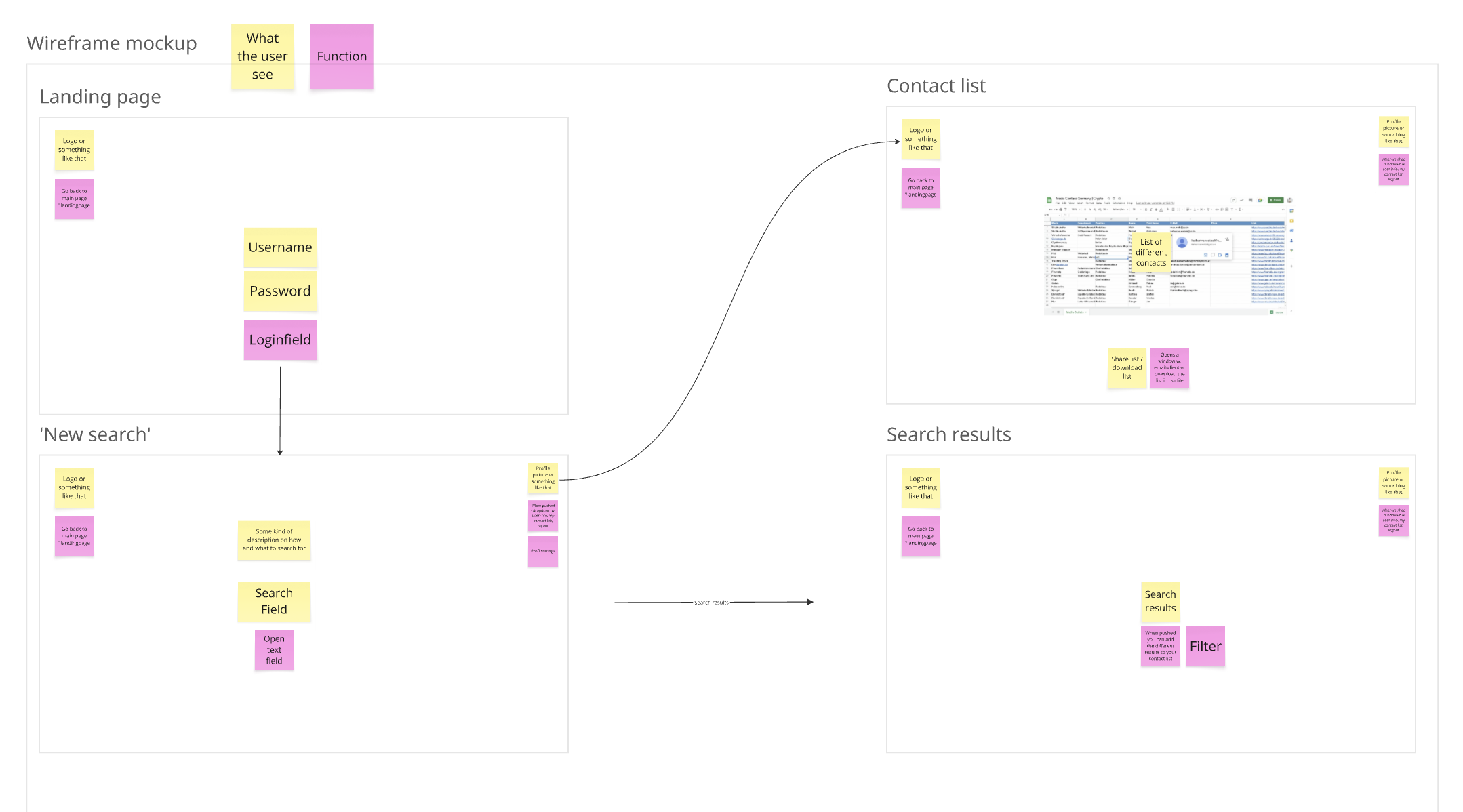
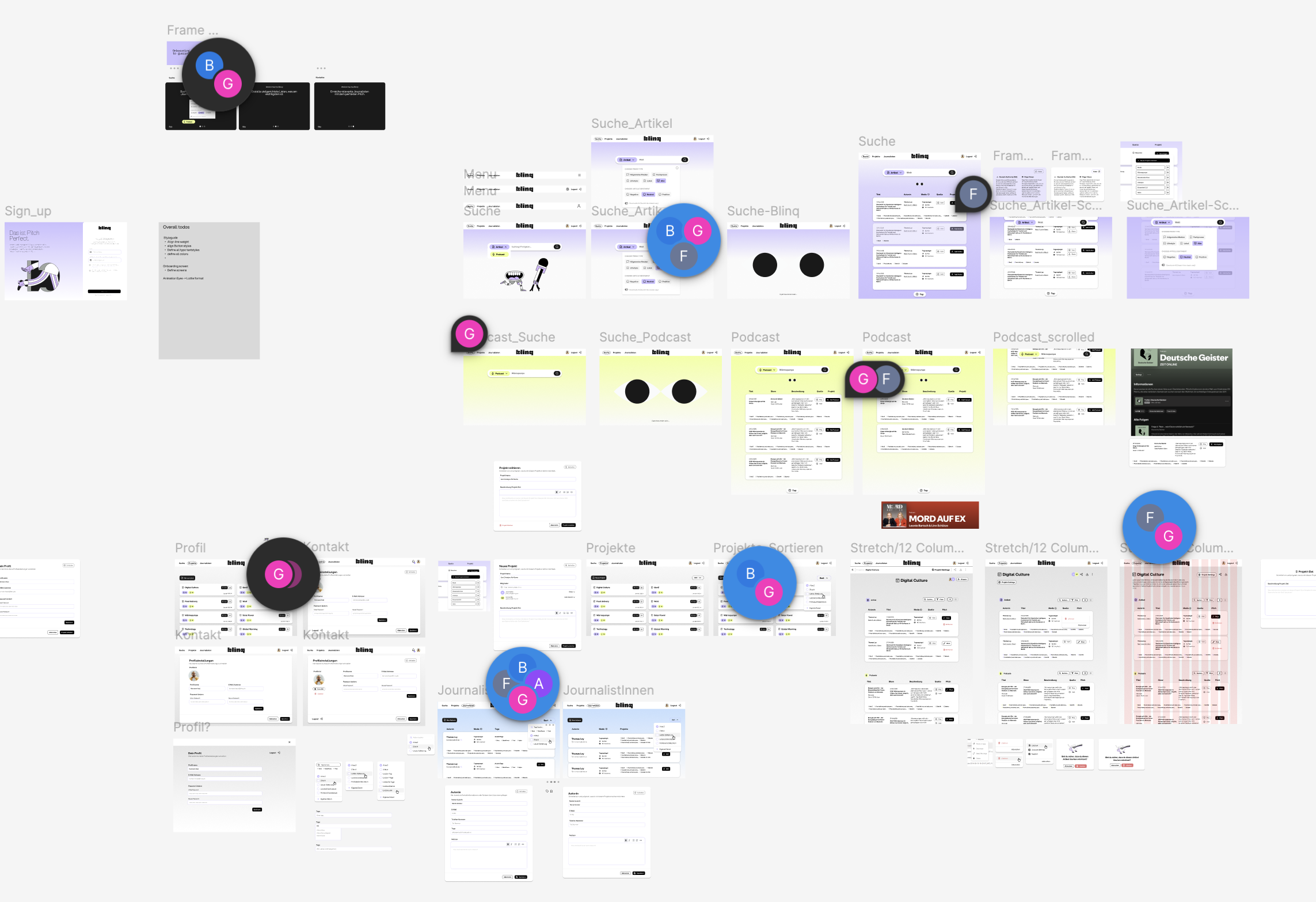
What started as an internal agency project grew into a product development process covering everything from research and naming to branding, UX, and launch. As the lead designer, I built the entire design foundation: information architecture, wireframes, visual concept, and the design system.
Research and Key Insights
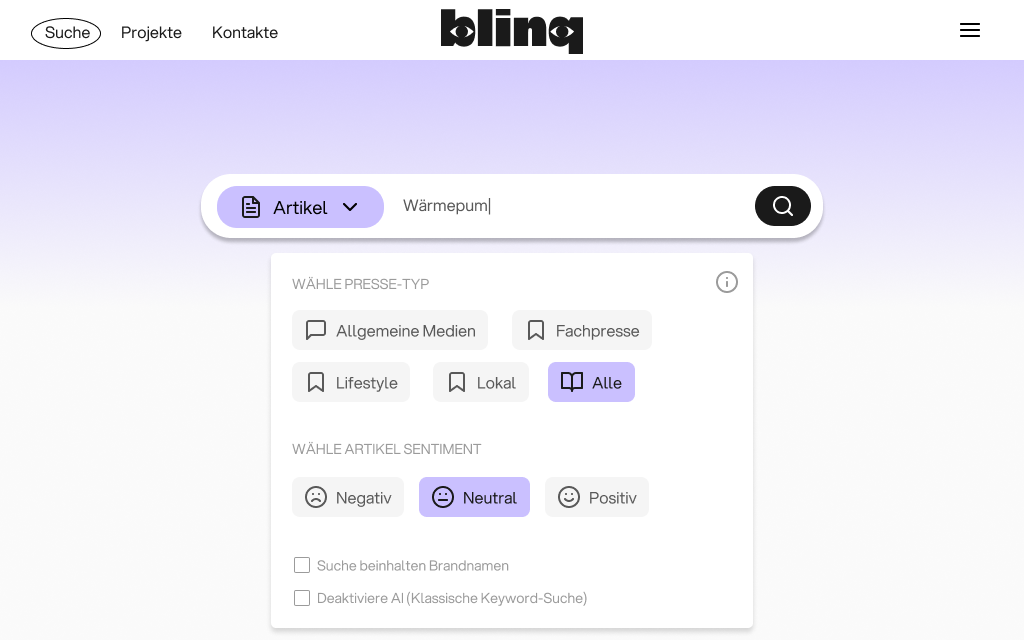
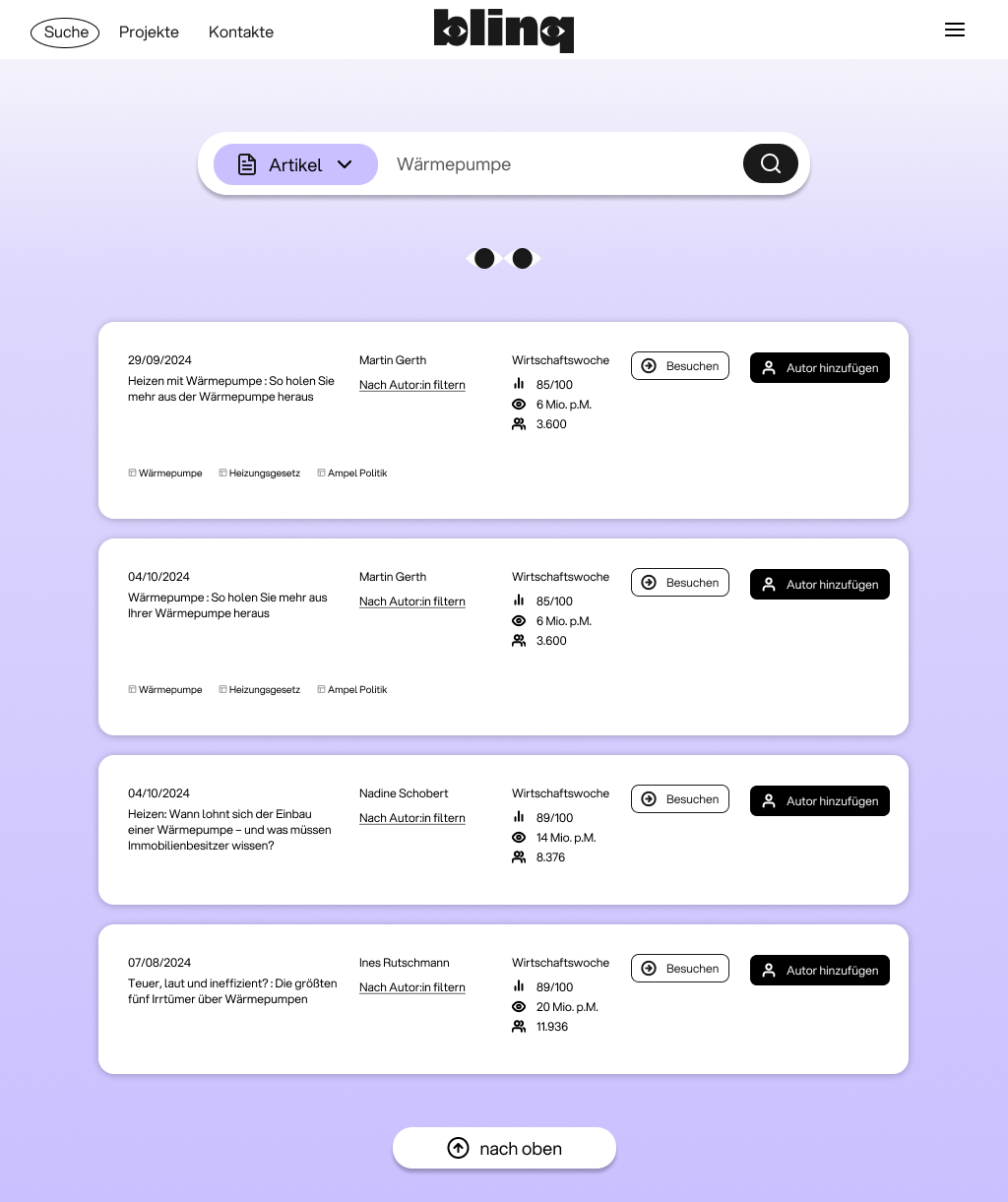
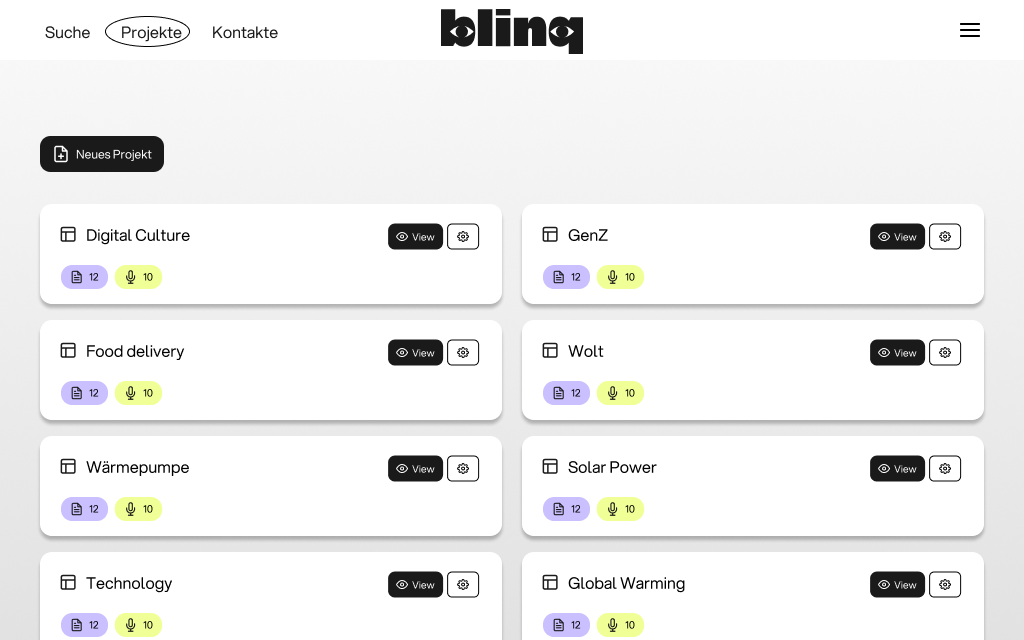
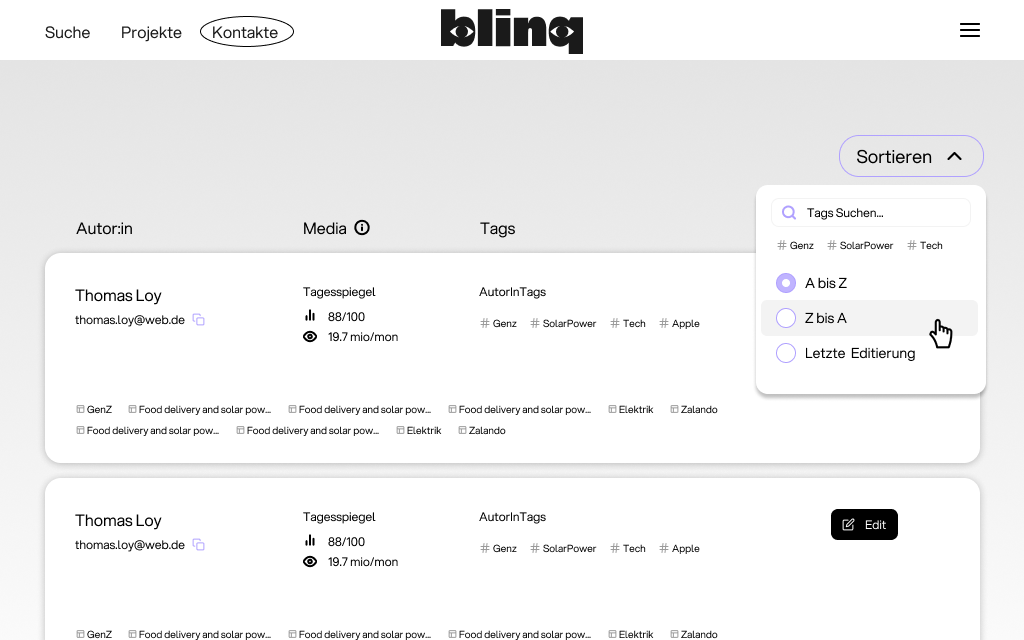
The research phase involved interviews with PR professionals and journalists across different agencies and outlets. Three things came up consistently: the search process is manual and painfully slow, existing tools filter by topic tags which means journalists who write across categories get missed, and sending to 10 highly relevant contacts always outperforms sending to 100 random ones. These insights directly shaped the product's core logic: search based on actual article content rather than predefined tags, live results from RSS feeds instead of static databases, and shared workspaces so teams can work together without maintaining parallel lists.
Branding and Visual Direction
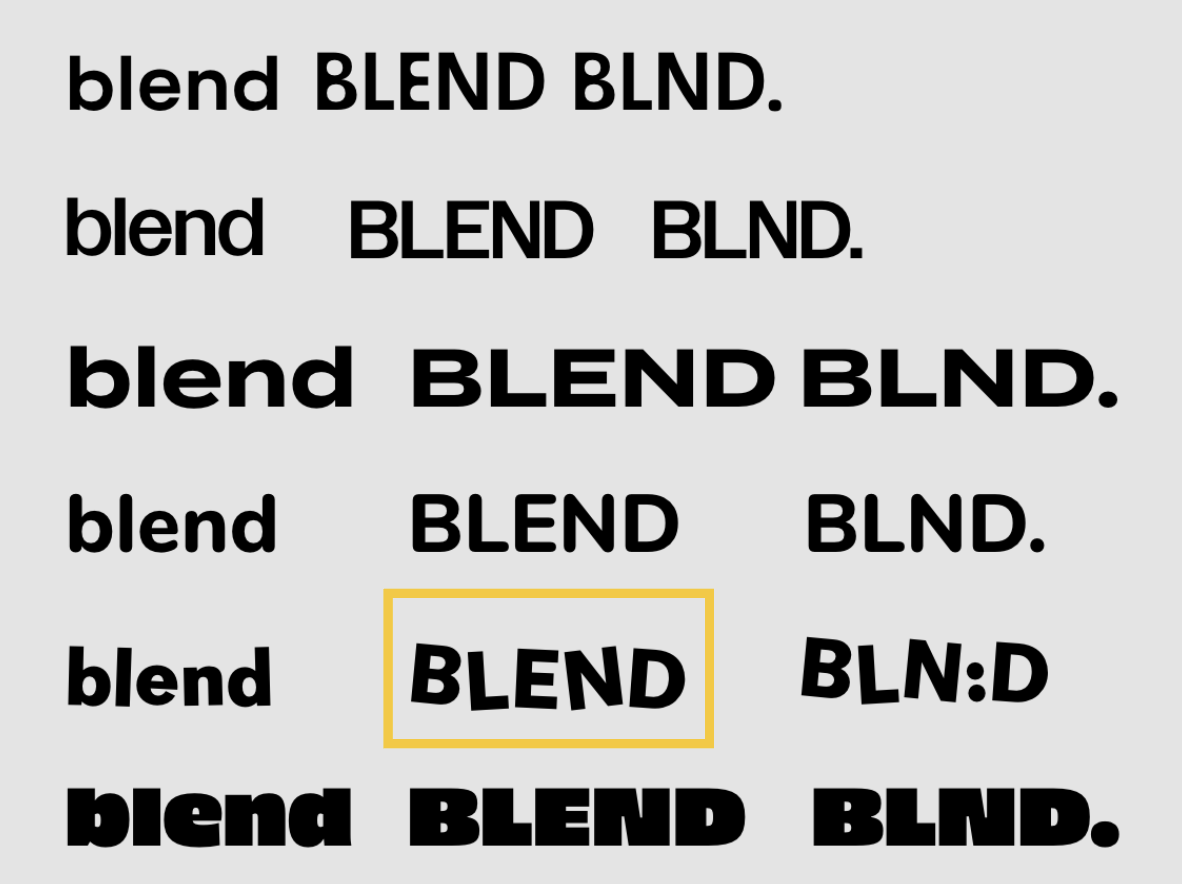
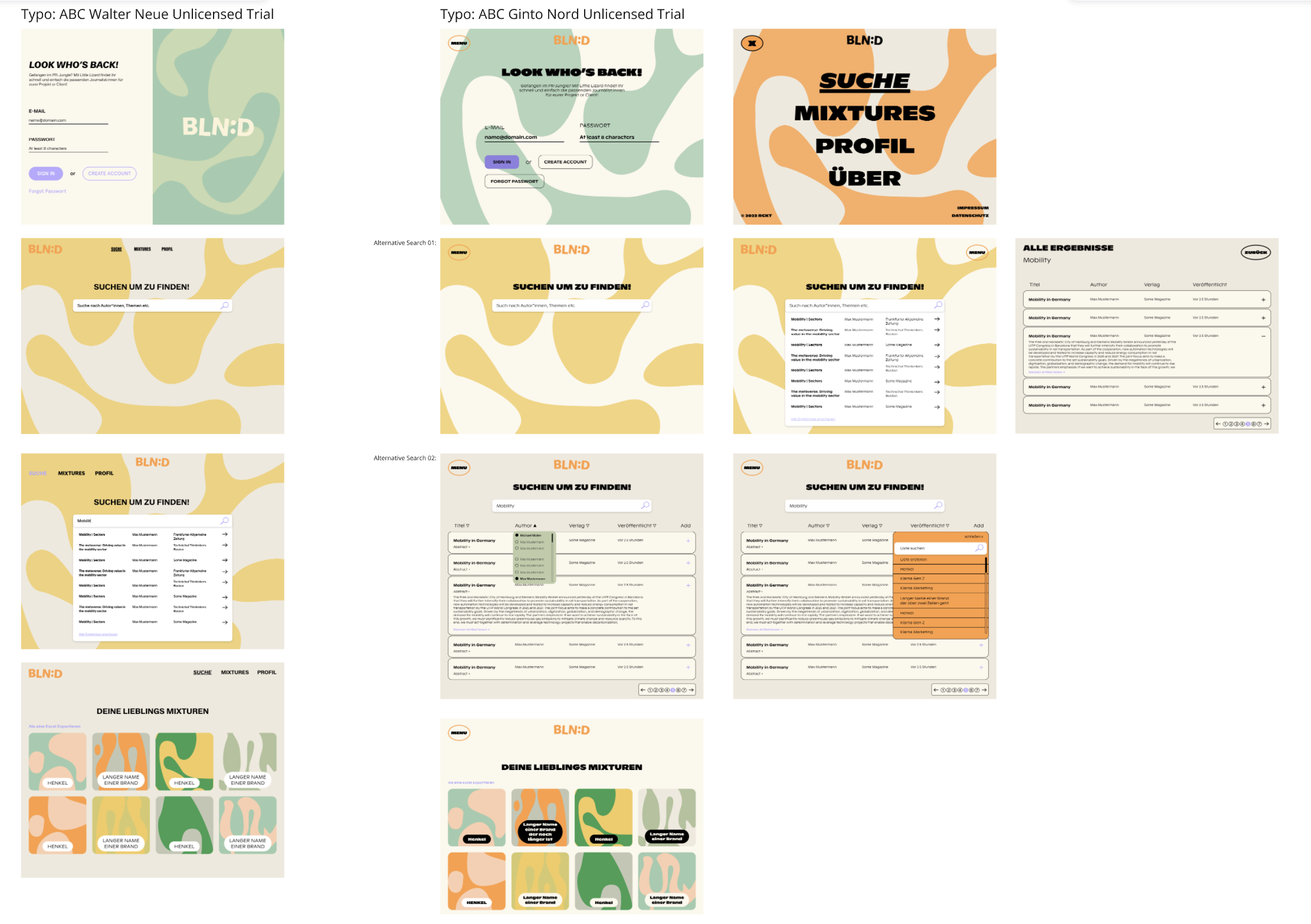
The name and brand were built from scratch as part of the process. After exploring directions ranging from cocktail-themed names like "PR on the Rocks" and "PR Blender" to more generic options, the team landed on blinq: short, memorable, and flexible enough to grow with the product. Three visual routes were explored before settling on a clean, confident B2B direction with enough personality to stand out in a category dominated by generic enterprise software. Andrea Cardorin led the branding with my UX support, and an illustrator contributed to the visual identity.
Design and Iteration
The wireframes I built formed the structural backbone of the product. From there the design evolved through close collaboration with the development team, regular feedback from users, and ongoing expert interviews. Since the launch in October 2024 the product has continued to grow, with new features being scoped and shipped continuously based on what real users actually needed.
Result
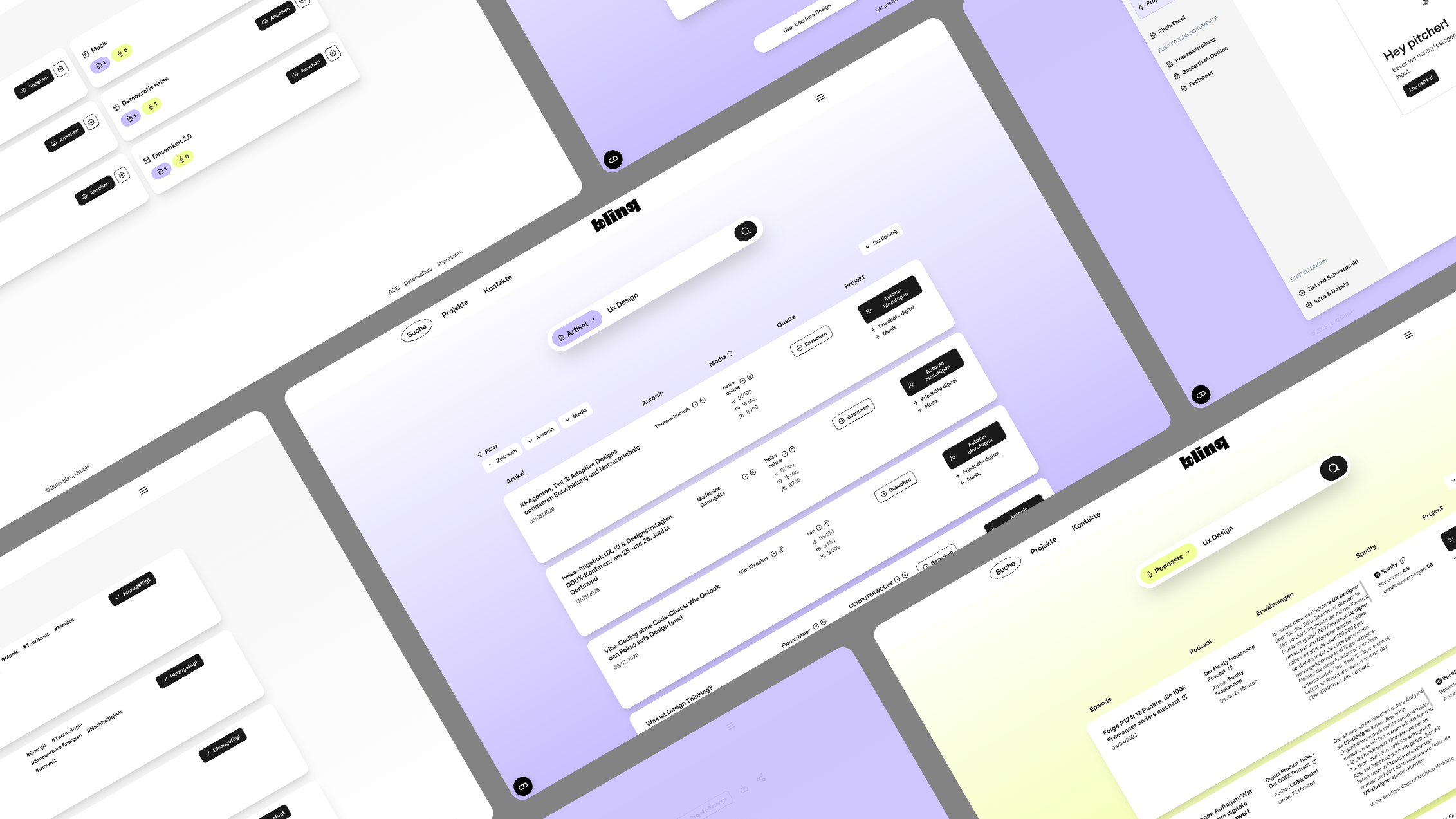
blinq launched in October 2024 and has since grown into an operational startup with paying clients including agencies like RCKT, featured in t3n and Gründerszene, and rated 4.6 stars on OMR Reviews. What started as a journalist search engine has evolved into a full visibility platform. The product today covers three core areas: a real-time PR search engine that scans hundreds of media outlets and over one million podcast transcripts to find the right journalists and hosts for a story; a GEO tool that analyses how a brand appears in LLM responses like ChatGPT and benchmarks it against competitors; and an AI pitch assistant that generates personalised outreach emails based on actual journalist feedback.