How do we make the topic of kidney disease more approachable and raise awareness for the risks and prevention of kidney failure?
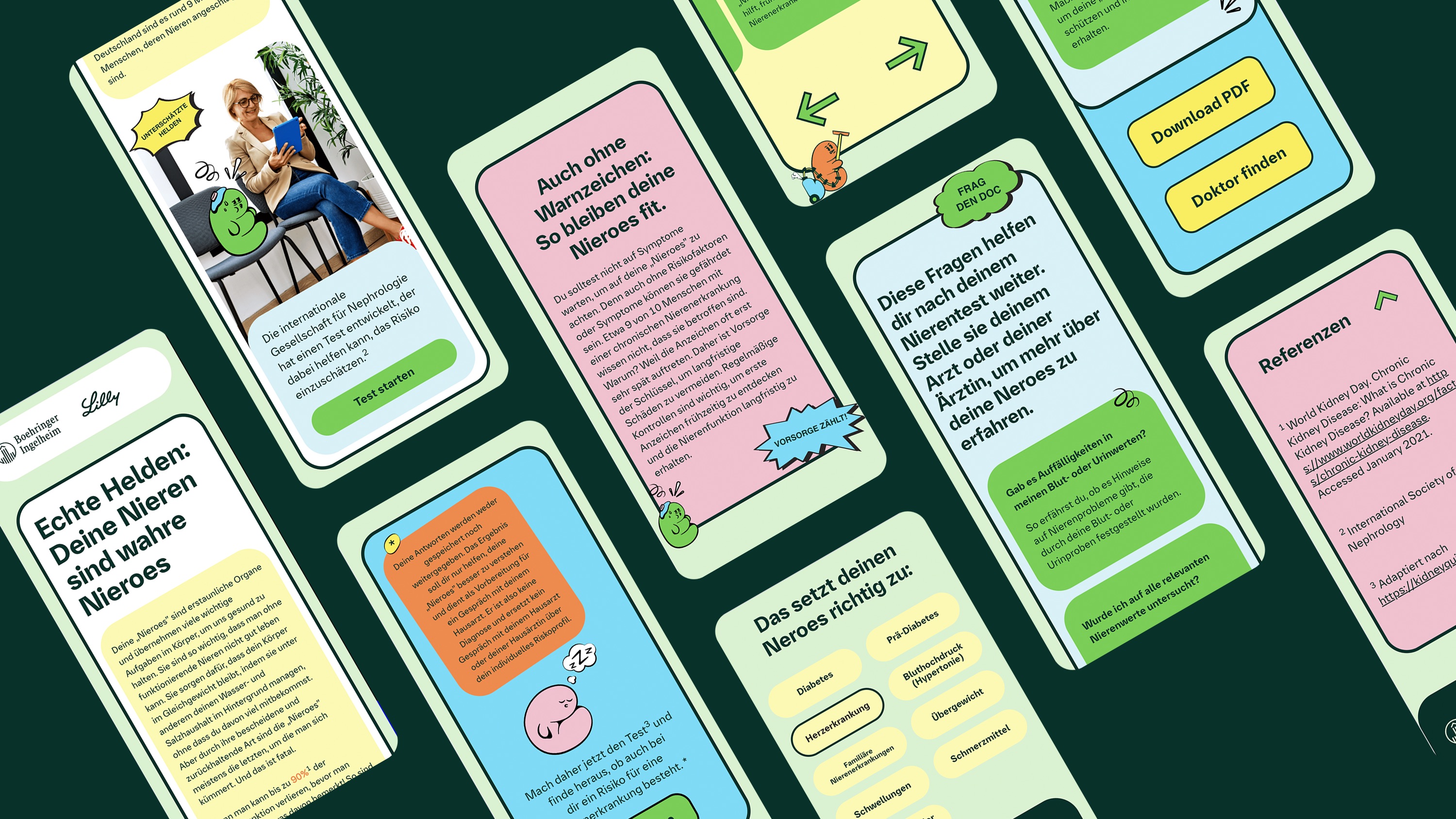
Kidney disease has a communication problem. Up to 90% of kidney function can be lost before any symptoms appear, which means most people simply do not think about it until it is too late. Boehringer Ingelheim wanted to change that with a campaign targeted at 40 to 60 year olds, using humor and warmth instead of the heavy medical imagery that typically surrounds the topic. The digital centrepiece was deinenieren.de, a campaign website that needed to feel engaging rather than clinical, and actionable rather than overwhelming.

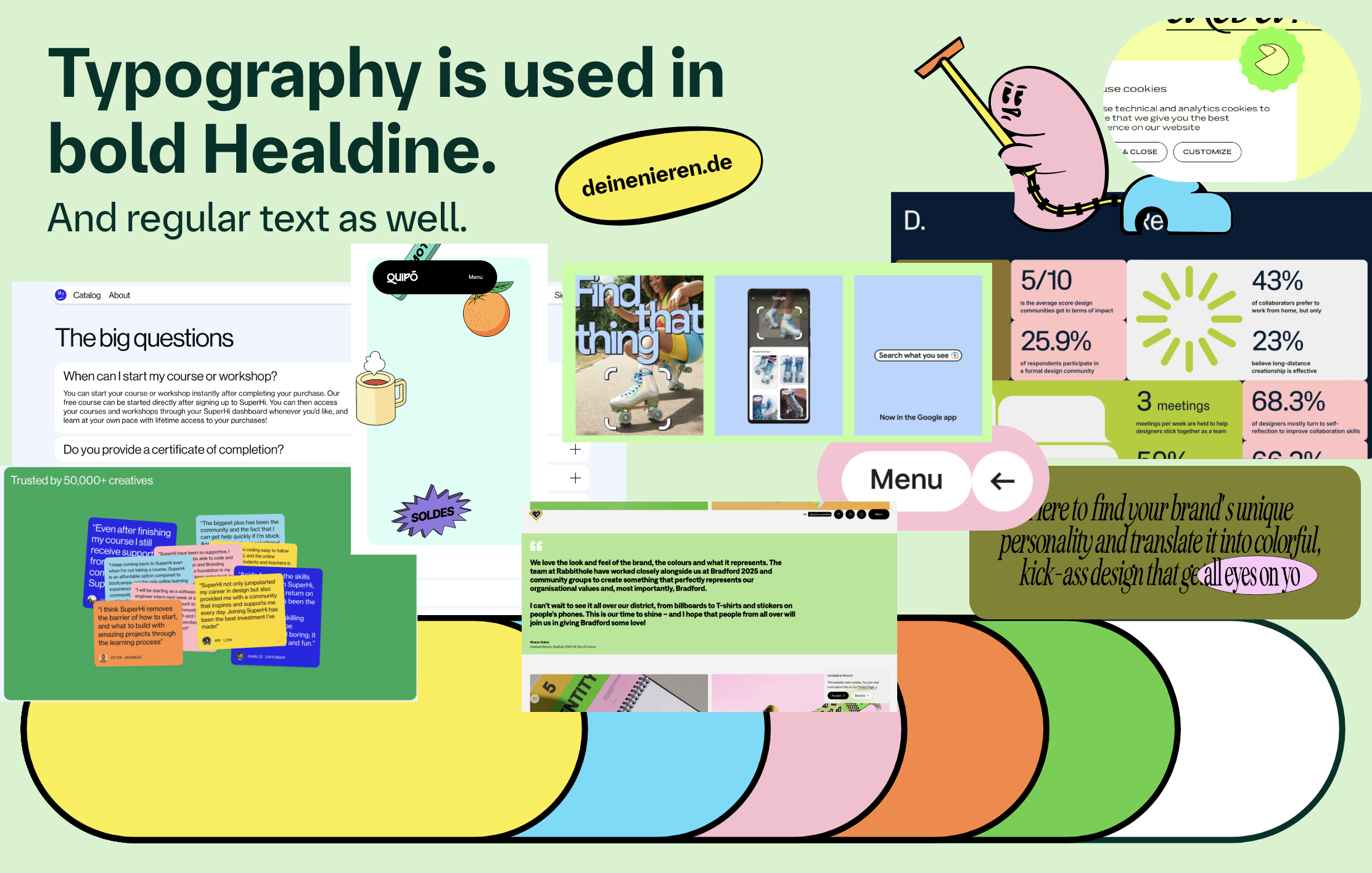
The campaign was developed at RCKT for Boehringer Ingelheim, with the creative direction built around the "Nieroes", friendly illustrated kidney characters designed to give the organ a personality and make the topic feel less distant. The website needed to carry that tone into an interactive experience.
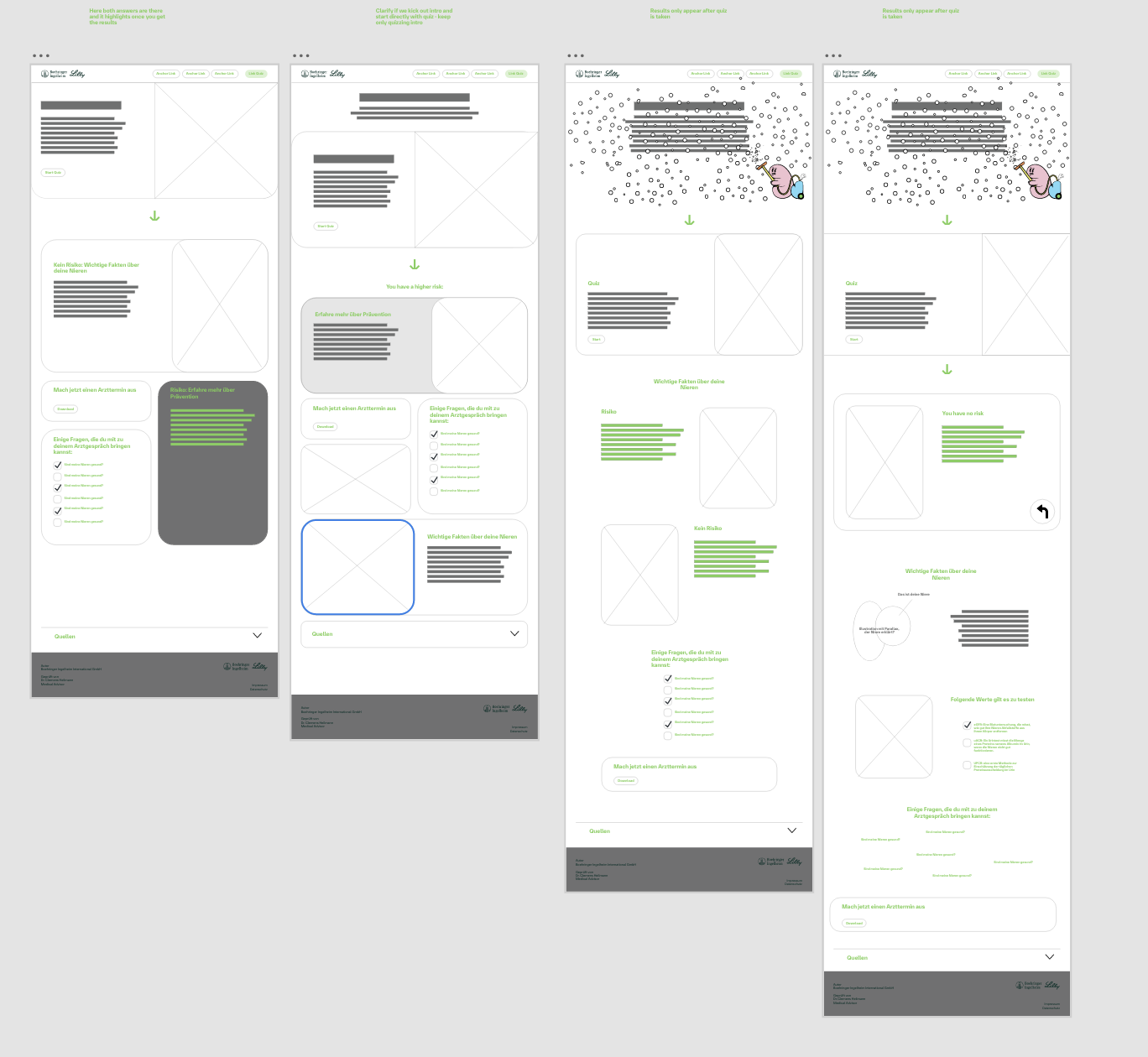
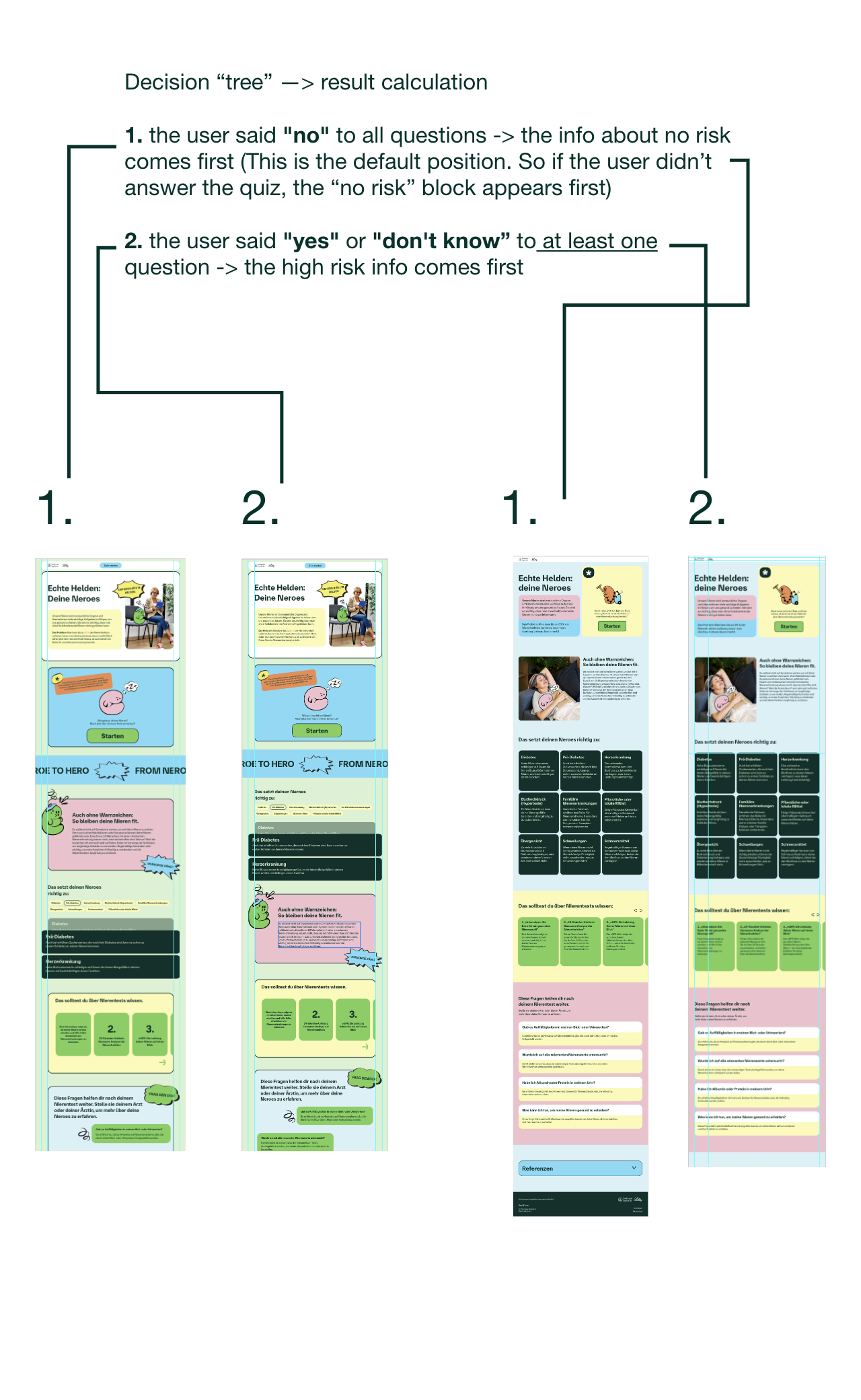
Working alongside UX lead Marta Saavedra, I co-designed the core interaction mechanic of the site: a symptom-based self-test that gives users a personalised result based on how many risk factors they identify with. The test logic was built around three possible outcomes ranging from low to higher risk, with messaging that adapts to each level. The key design decision was that all three outcomes lead to the same central knowledge section, reinforcing that kidney health is relevant for everyone regardless of their result, not just people who score high.
This decision was deliberate. The goal was not to alarm users or push them toward a diagnosis, but to lower the barrier to engagement and make the topic feel personally relevant without being threatening. Every user, whether at risk or not, ends up in the same place: better informed and motivated to talk to their doctor.
Result
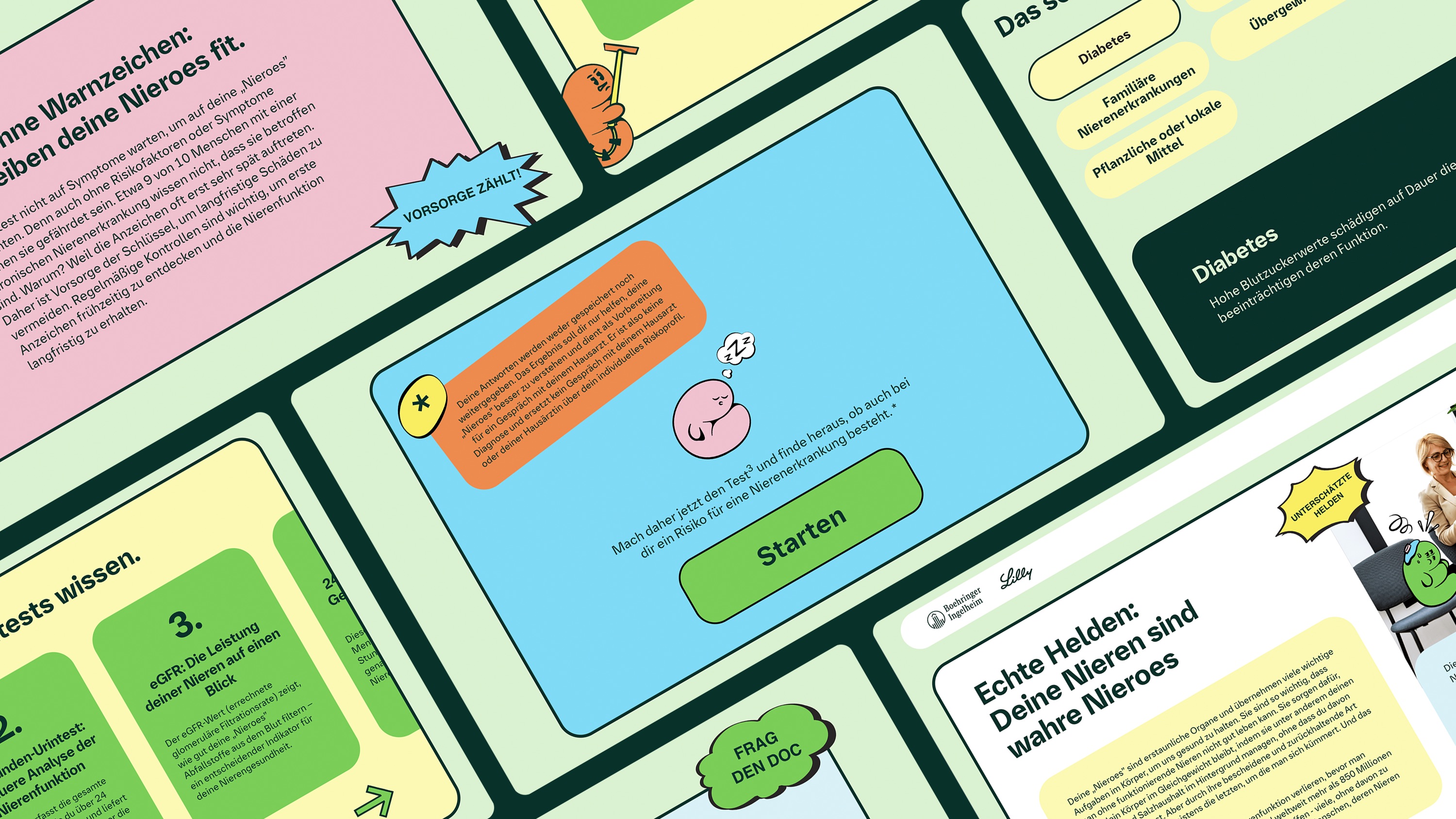
The site launched as part of the broader Nieroes campaign and performed significantly better than expected. The bounce rate averaged 38% with some pages as low as 12%, and the seven-step test was completed by a high proportion of visitors, numbers that surprised even the client team at Boehringer Ingelheim. The campaign was presented at the OMR Festival 2025 as a case study in how healthcare communication can move away from fear-based messaging toward something genuinely engaging.