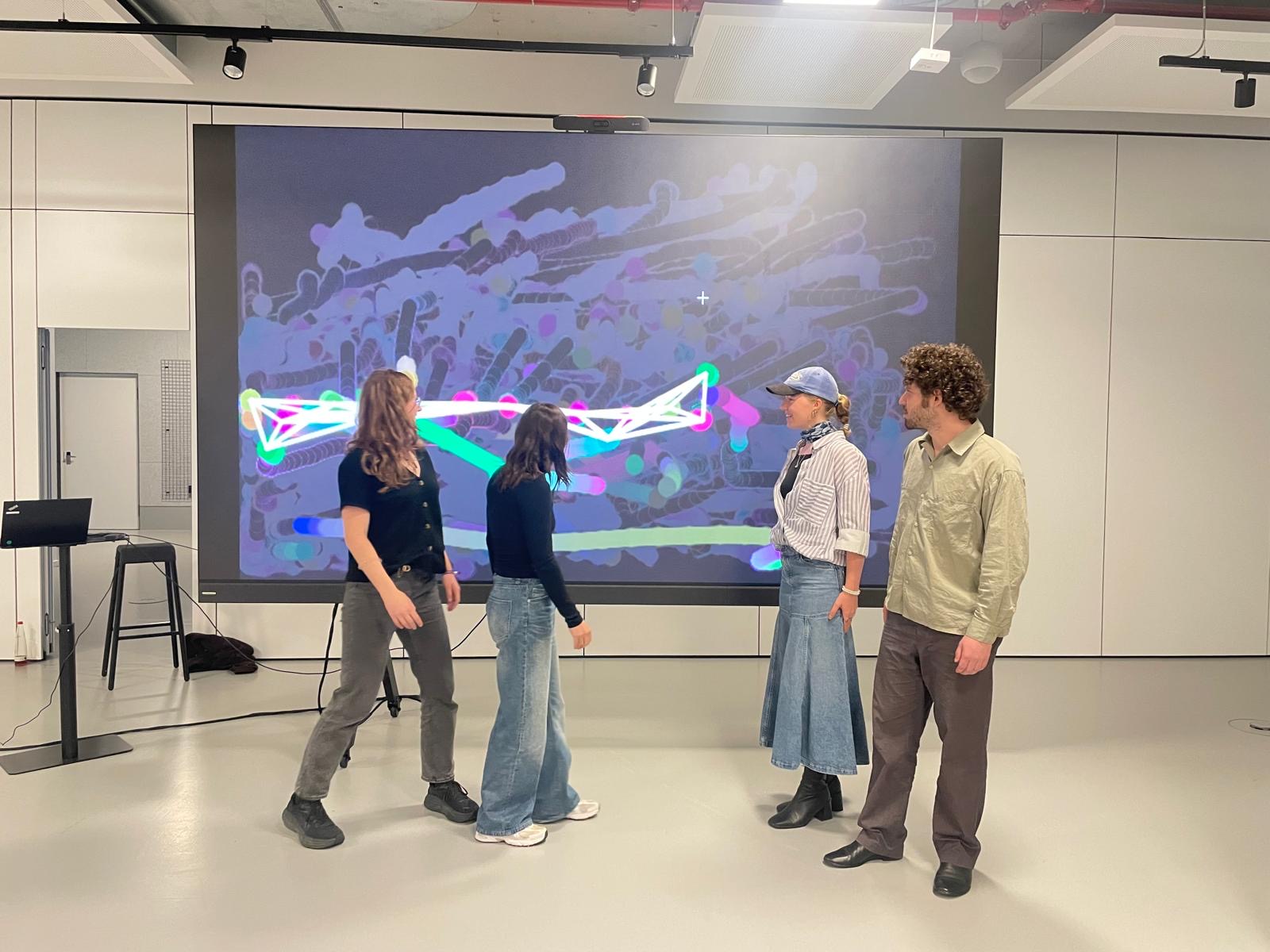
How can AI and data be used to create art installations in public spaces, and what data can be collected and used for creative concepts?
This was the brief given to Team CRE:AI:TE at the Fraunhofer Summercamp 2025, a one-week program where students from different disciplines developed digital concepts for urban spaces. Looking at the Werksviertel in Munich, the team noticed how different user groups, office workers, tourists, locals, pass through the same space at different times without ever really noticing each other. The question became: how can technology make those invisible connections visible?
From Observation to Concept
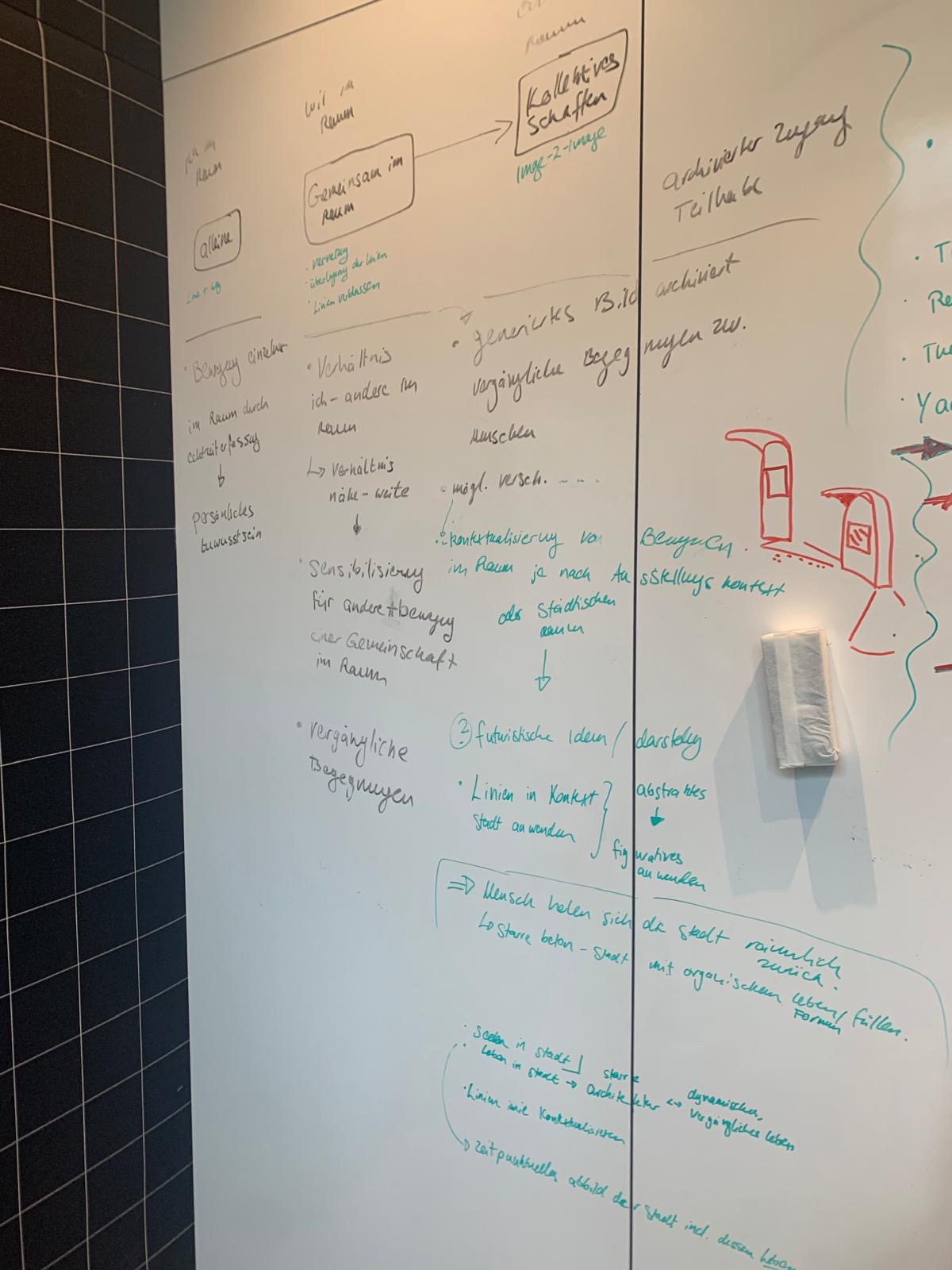
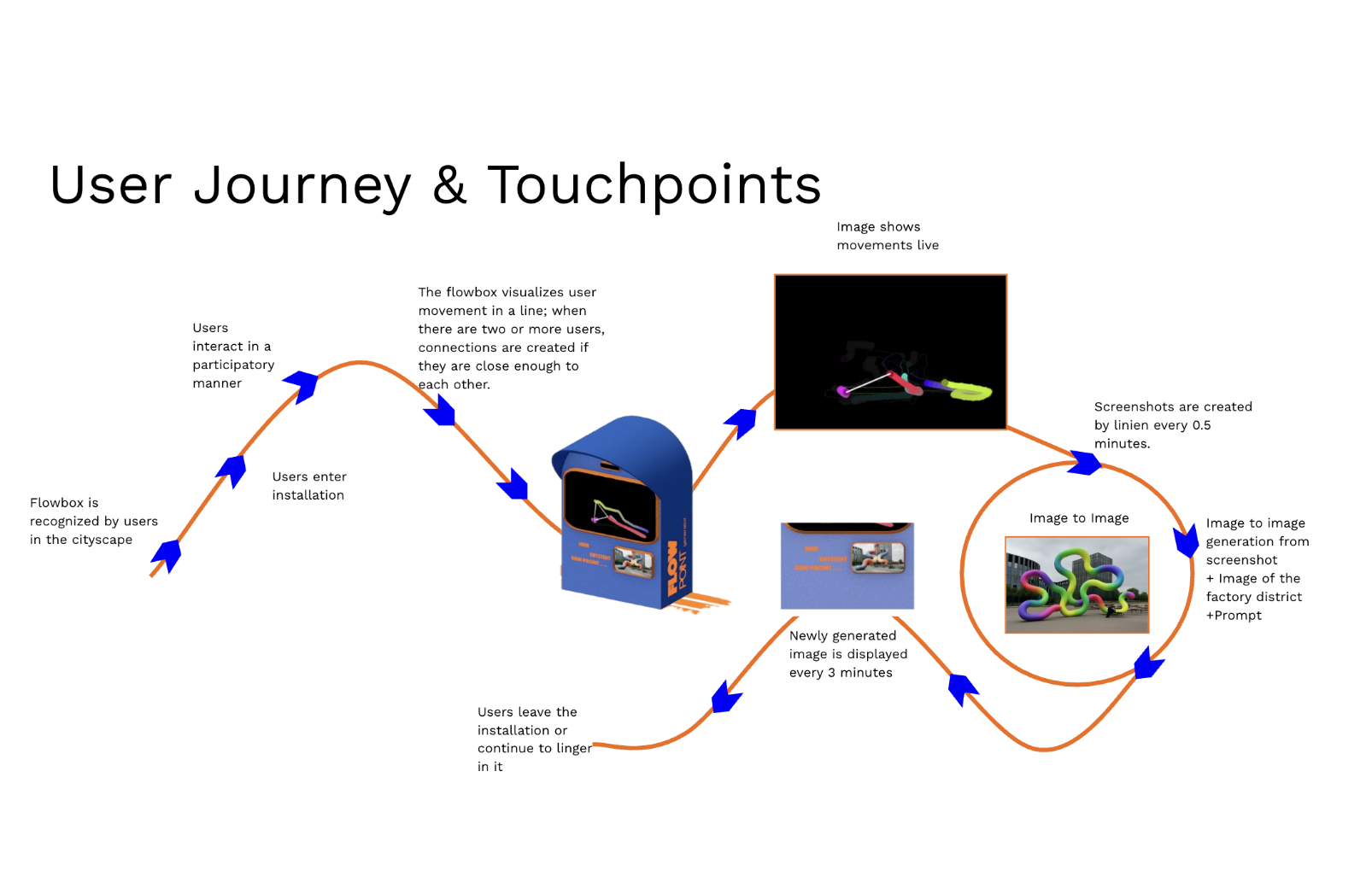
The concept was built around three layers of experience: the individual becoming aware of their own presence in a space, connections forming between people in proximity, and users across different times collectively shaping the identity of a place over time. These three layers gave the installation both its conceptual depth and its interaction logic.
Technical Concept
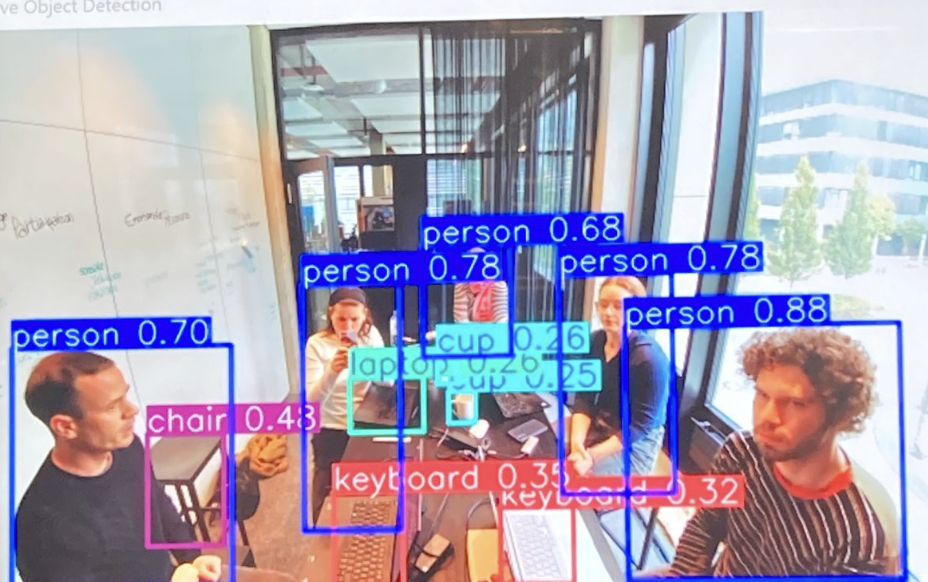
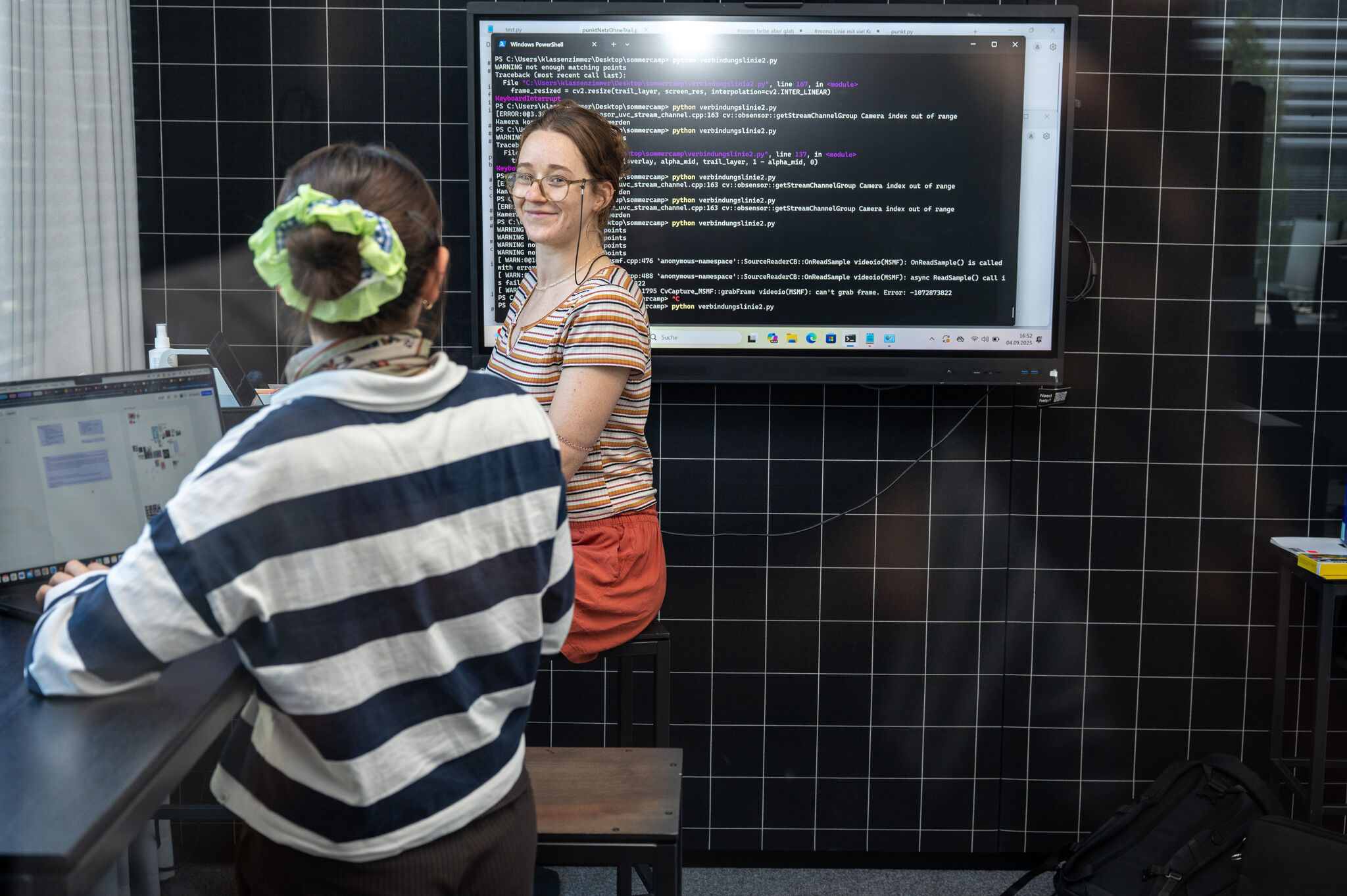
The installation uses a live camera feed processed in real time with Python, OpenCV, and Ultralytics YOLOv8 to detect and track people by their head positions. Each person gets a tracking ID and their movement is visualized as a glowing neon line on a large LED screen. When two people come close enough, connection lines appear between them. Every 30 seconds a screenshot of the movement pattern is captured, and every 3 minutes that screenshot feeds into an image-to-image AI generation pipeline alongside a contextual photo of the location, producing a new AI-generated artwork shaped by the actual movements of real people in that moment.
Privacy was a deliberate design decision from the start: no data is stored in databases, all movement data lives only in RAM during the session, and the system uses only person detection without any facial recognition.
Product Design
The physical form, the FlowPoint MediaBox, was designed around three principles: reduced, mobile, and scalable. Built from welded sheet steel with a safety glass screen, it was conceived to be weatherproof, vandal-resistant, and visually striking enough to draw people in from the surrounding urban space.

Result
FlowPoint was developed during the Fraunhofer Summercamp 2025, a one-week interdisciplinary program under the theme "RECL:AI:MING THE CITY", bringing together students from technology, design, media, and urban planning to develop concepts for urban spaces alongside Fraunhofer researchers. At the final presentation, FlowPoint won the award for best presentation and concept, judged by a jury including representatives from the Fraunhofer IAO, the Deutsches Museum, and the Friedrich Naumann Foundation. The project was also featured in the Fraunhofer network magazine Quersumme, which described it as a concept that turns individual passersby into a visual collective and a temporary piece of public art.