Developed at RCKT Dentsu Germany for Besins Healthcare, Germany's leading specialist in bioidentical hormone therapies. Their corporate site served healthcare professionals well, clinical, precise, regulated. What didn't exist was anything designed for the woman searching for answers at home.
The average time between first symptoms and a menopause diagnosis in Germany is several years. Besins wanted to close that gap with a campaign and platform that could do what a prescription pad never could: make women feel seen and give them language for what they were already experiencing.
Campaign Concept and Art Direction
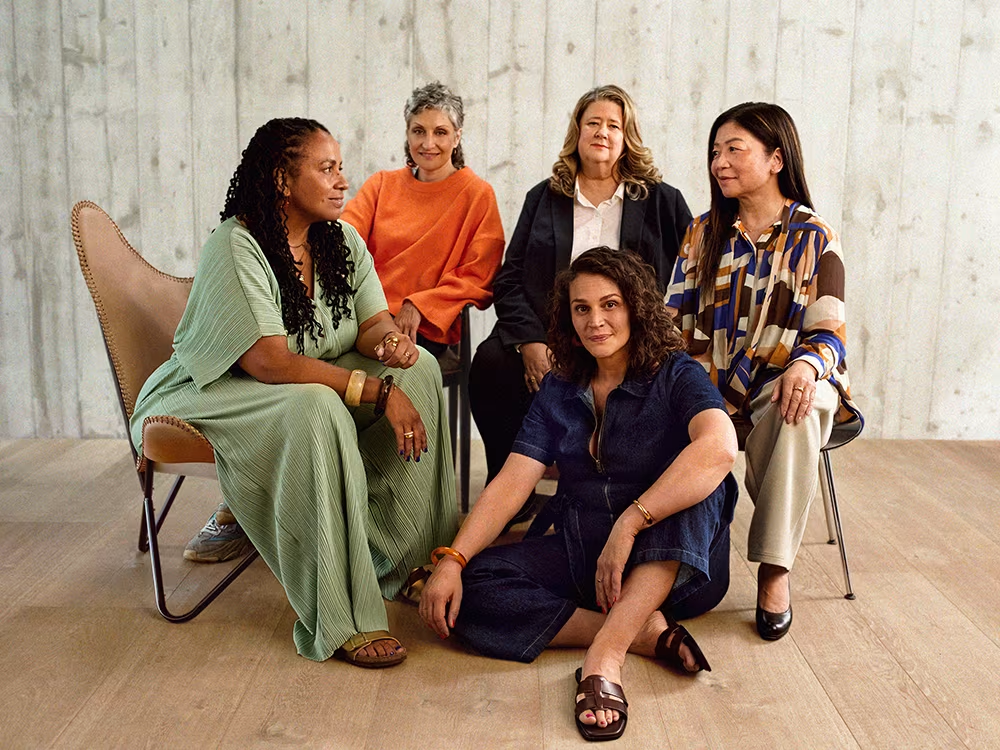
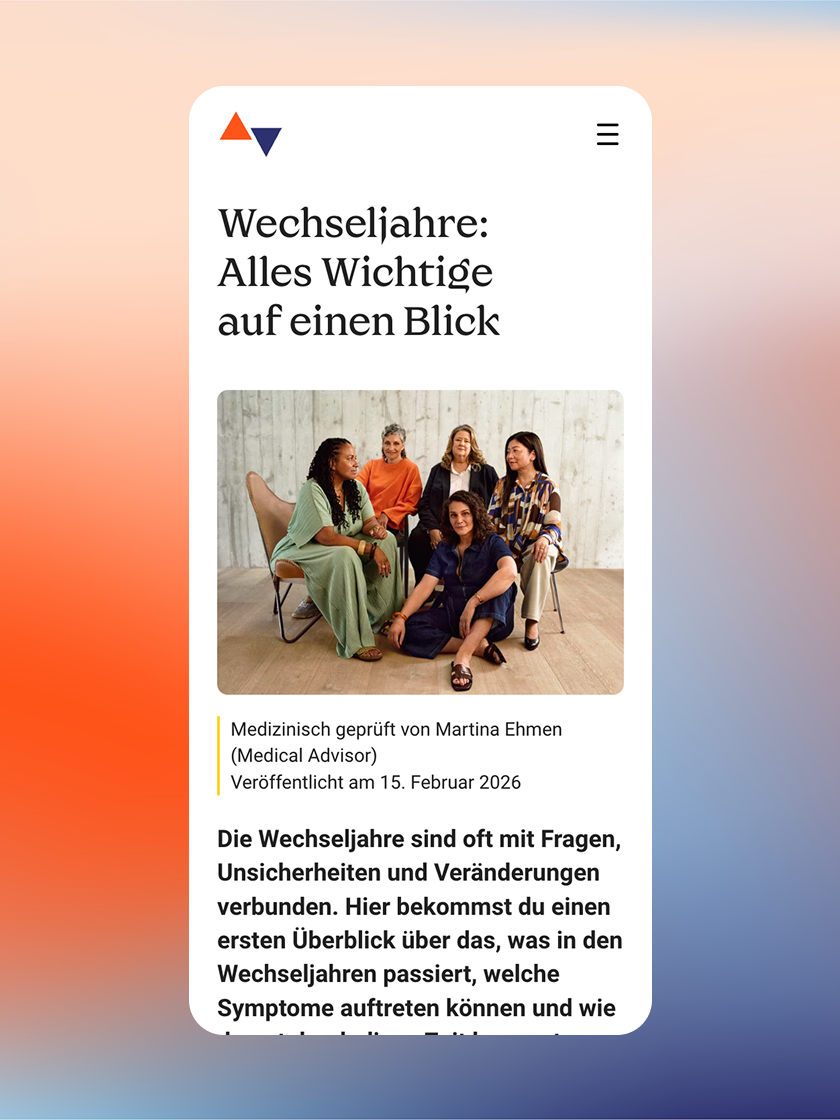
The campaign "Mach's zu deinen Wechseljahren" was built around a clear insight: the target group of women aged 45 to 59 is not uninformed, they are underrepresented. I co-developed the art direction and wrote the creative brief for the photo and film shoot. Several deliberate decisions shaped the visual language.
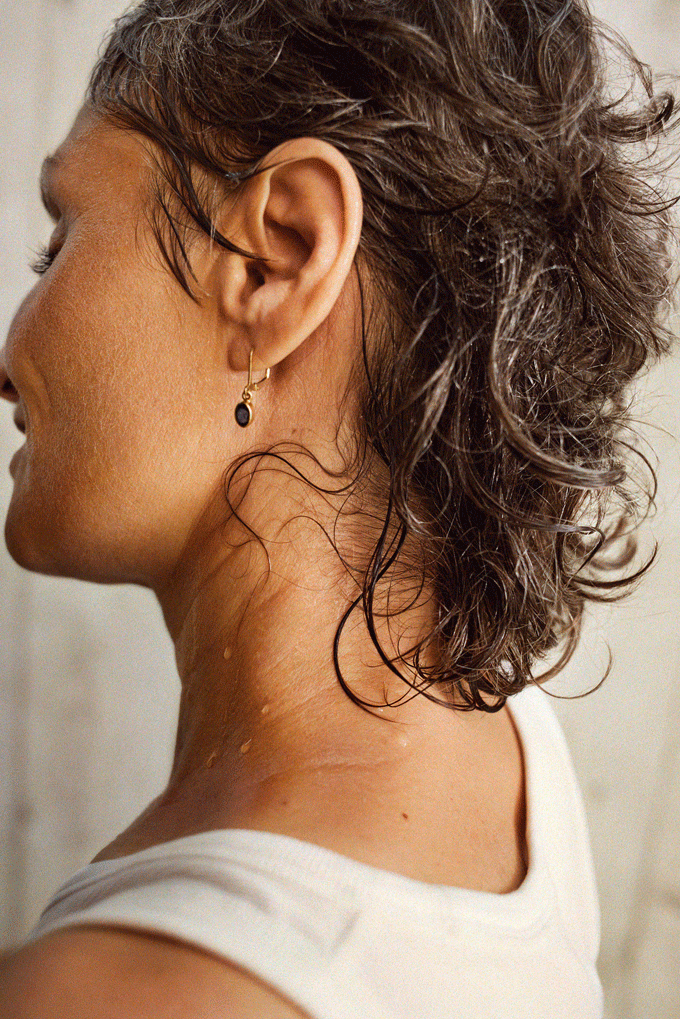
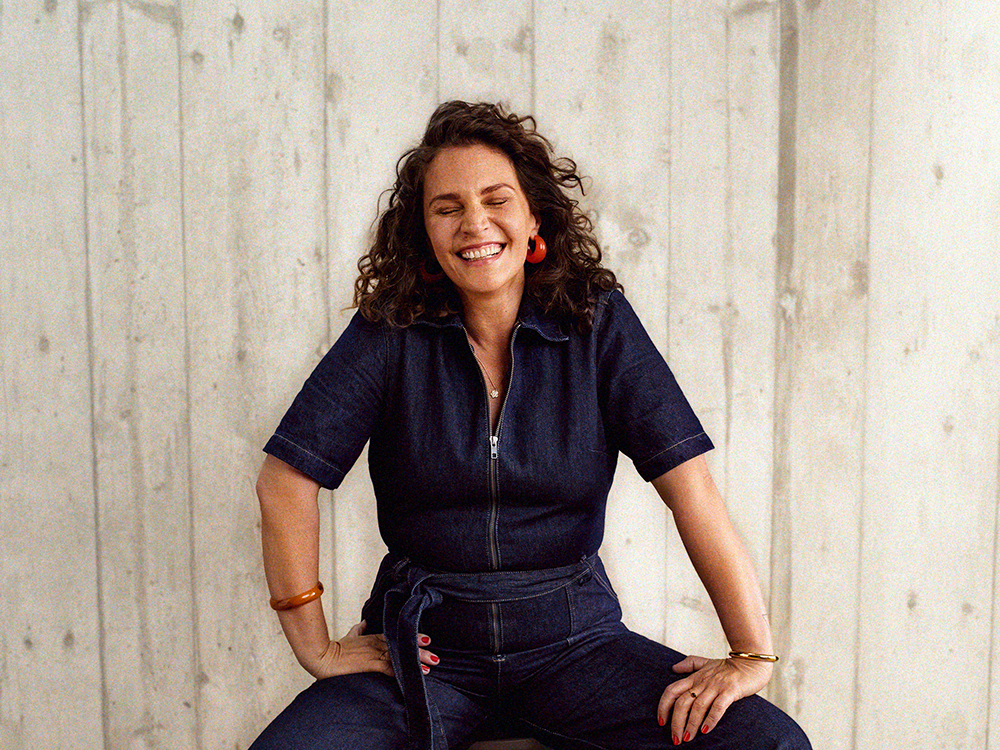
We explicitly sought actresses, not models. Women between 45 and 59, diverse in body type, background, and appearance. Grey hair, wrinkles, and skin texture were not to be corrected but celebrated. Rather than shooting across multiple locations, we used different chairs as a conceptual anchor, a kitchen chair, an office chair, an armchair, each placing a woman in a recognisable context without being heavy-handed. Natural daylight with shadows used deliberately as an aesthetic element rather than something to eliminate. Colour accents drawn from the campaign CI gradient, a blue chair, an orange pullover, a touch in nail polish or eyeshadow, enough to tie the visuals to the brand without making the women look like props.
Website
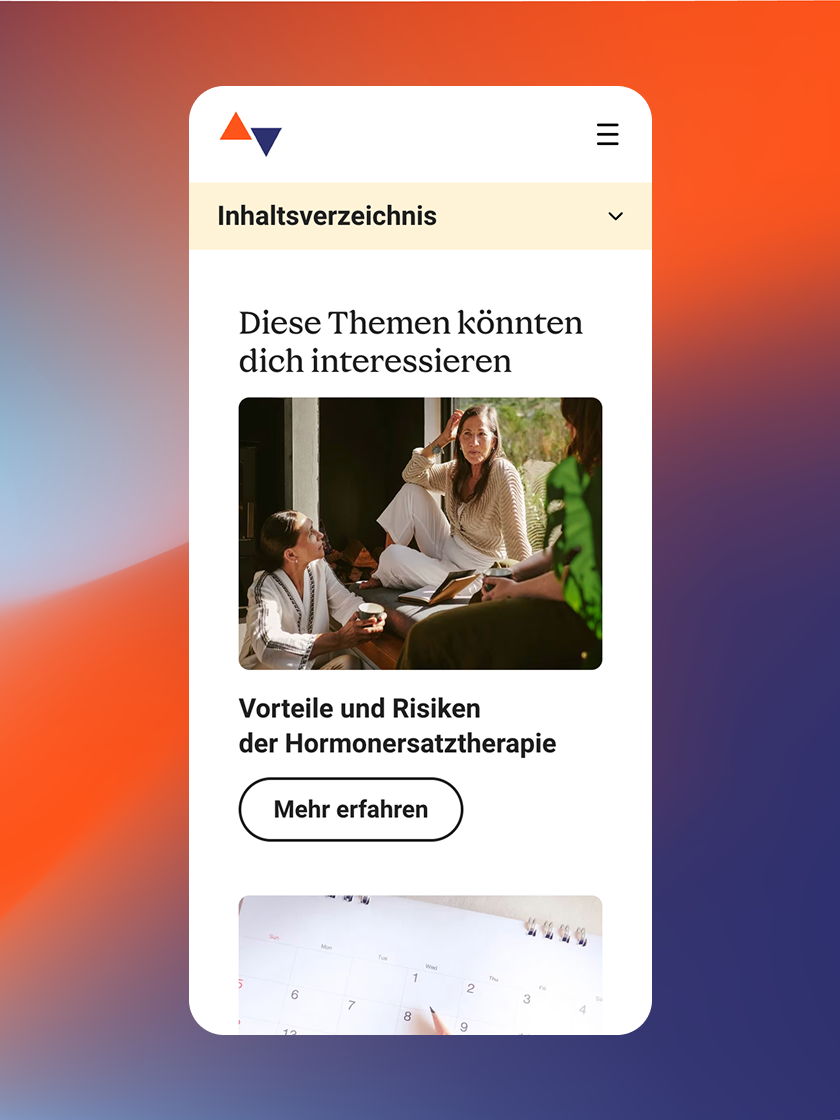
Alongside the campaign, I supported modules for the Besins website, working within an established design system alongside the broader UX and UI team.
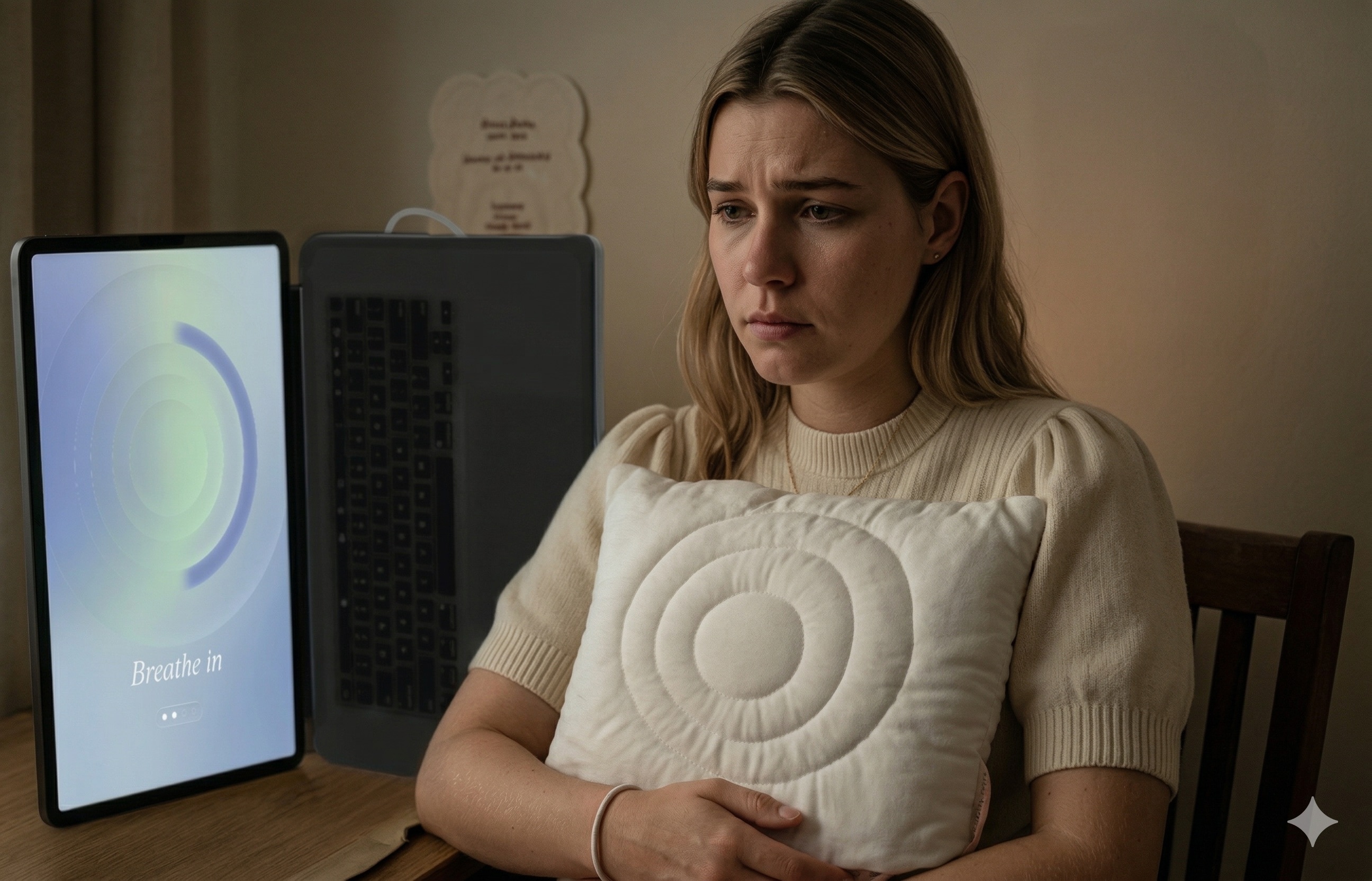
User testimonials and data revealed the core tension: most women arriving at the platform didn't yet have language for what they were experiencing. Mood changes, joint pain, disrupted sleep not yet connected to menopause. The design challenge was not information delivery. It was recognition.
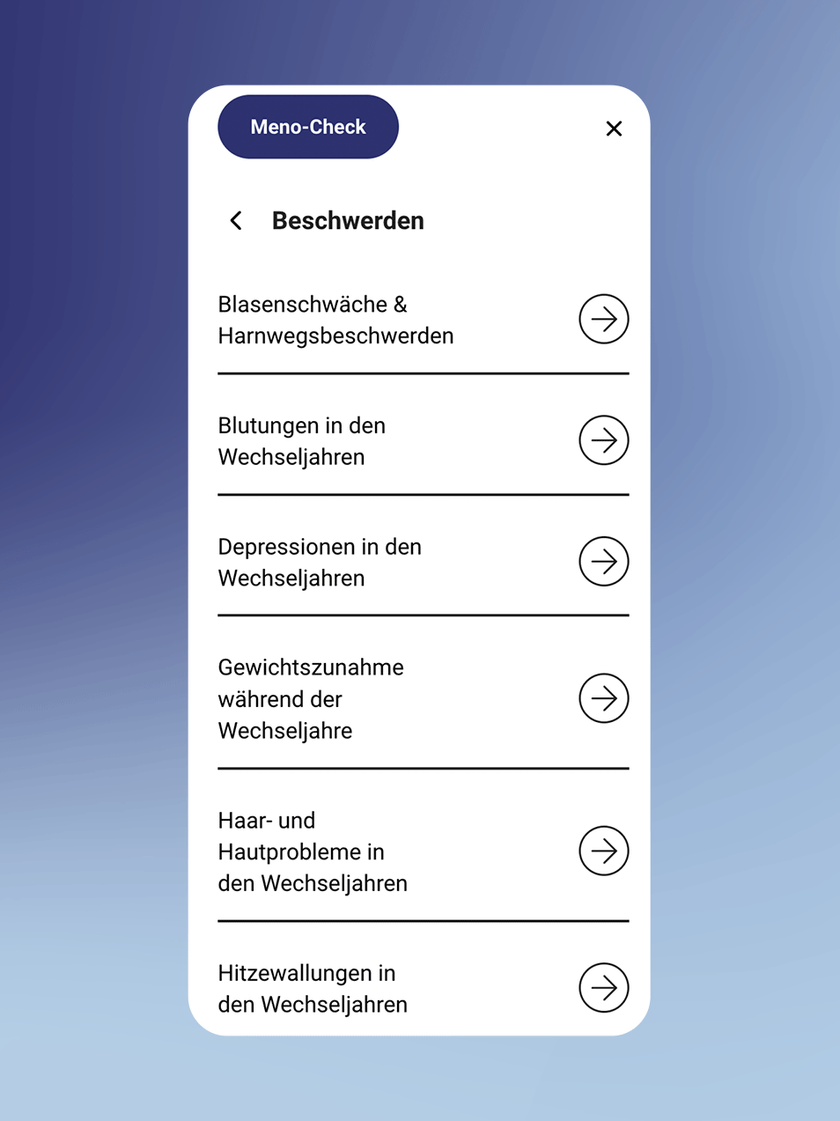
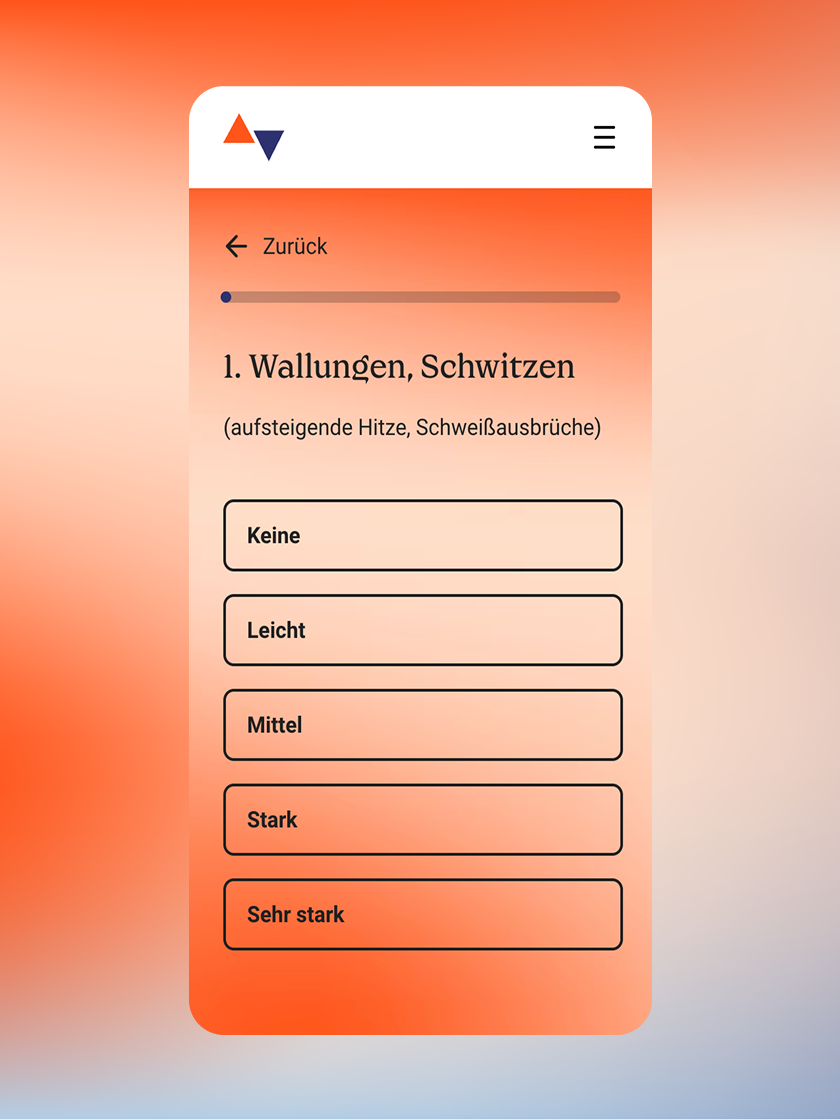
The central UX mechanic was the Meno-Check flow: an onboarding experience that starts from where each user actually is. It gives them language, routes them into relevant content, and lowers the barrier to booking a doctor's appointment. The flow was designed as a conversion mechanic that earns the right to convert by genuinely helping first, with each decision point structured as a testable hypothesis so the performance team could iterate against real behaviour.
Alongside the flow, I contributed modules for the wechseljahre-verstehen.de platform, working within a component-based design system in Figma built to scale across a content-heavy site. The visual system balances pharmaceutical credibility with the warmth a vulnerable audience needs to stay engaged. Motion was used to guide attention and reduce cognitive load, not for decoration.

Result
Art direction | UI Designer
Campaign concept: Georg Castens Art direction: Paula, Marta Saavedra, Giuliana Mei, Dennis Habieb UX/UI: Nathalie De la Fuente, Marta Saavedra, Giuliana Mei, Csog Csenge Design: Connor Wilson, Konstantin Köhler Motion design: Konstantin Köhler, Tomas Clarkson
Figma