
Forever Lost Deutschland?
Crises, whether ecological, financial, social, or political, shape how people feel about the world around them. And how people feel has real political consequences. Public discourse is full of crisis narratives, but the connection between emotional sentiment and democratic behaviour is rarely made visible. This project asked: what does it actually look like when a country loses faith?
.webp)
.webp)
%20-%20Correlation%20Matrix.jpg)
%20-%20Inspo.jpg)
The project was developed as part of "Mapping Cities, Making Cities", a data journalism seminar at FH Potsdam run in close collaboration with the Tagesspiegel Innovation Lab and the Urban Journalism Network, bringing together interface design and urban futures students to explore how data visualisation can stimulate public discourse.
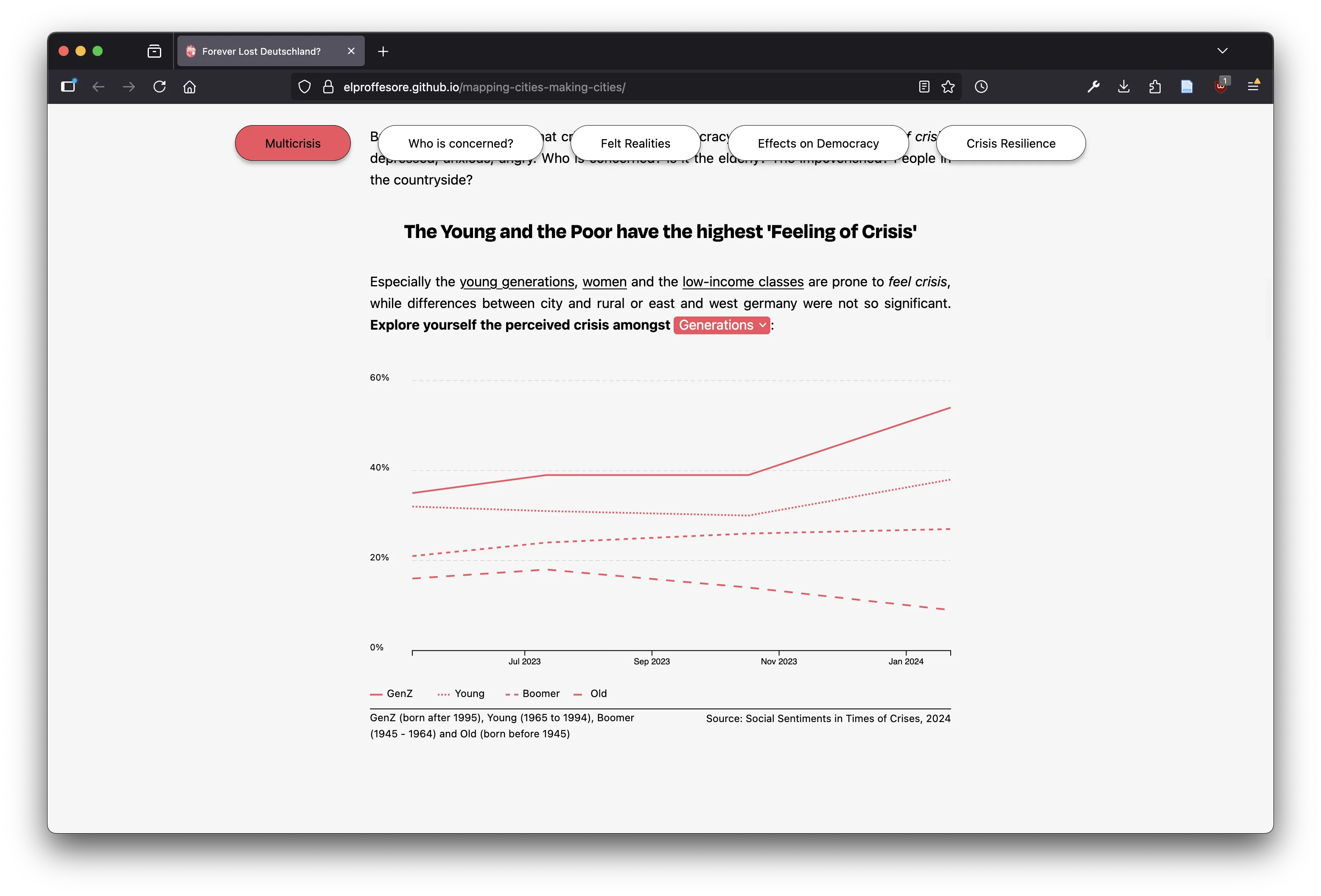
The foundation was the SOSEC dataset, a longitudinal study on social sentiments in times of crisis conducted by KIT and FZI in Germany and the USA since 2022. The first step was breaking down the dataset analytically: defining a composite "perceived crisis level" from proxy variables including anger, depression, financial anxiety, and a sense of doomsday mood, then cross-referencing this with demographic and geographic data to find meaningful patterns. Early hypotheses explored urban-rural differences, generational divides, and the connection between loneliness and political extremism before the team narrowed in on the most significant findings.
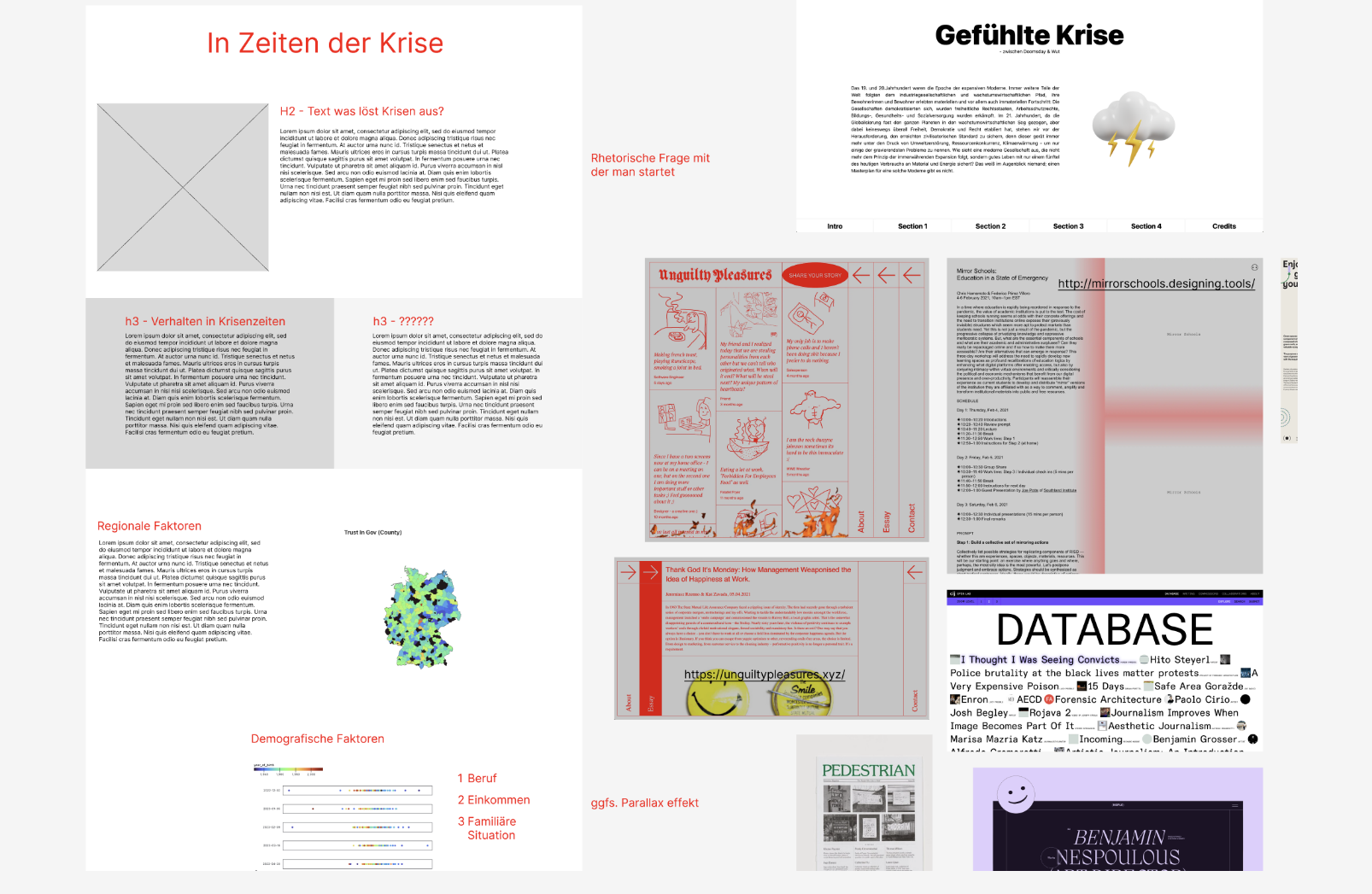
The storyline went through multiple iterations and peer feedback rounds before landing on a four-part narrative structure: who is feeling the crisis, how crisis distorts perceived reality, what it does to democratic trust and political attitudes, and what can be done to strengthen resilience. A key design decision was building interactive elements that let users explore the data themselves, choosing between demographic groups to compare crisis levels, rather than presenting static conclusions.
My contribution focused on the UI design, visual system, branding, and narrative structure, making the data story feel coherent and engaging across sections.
Result
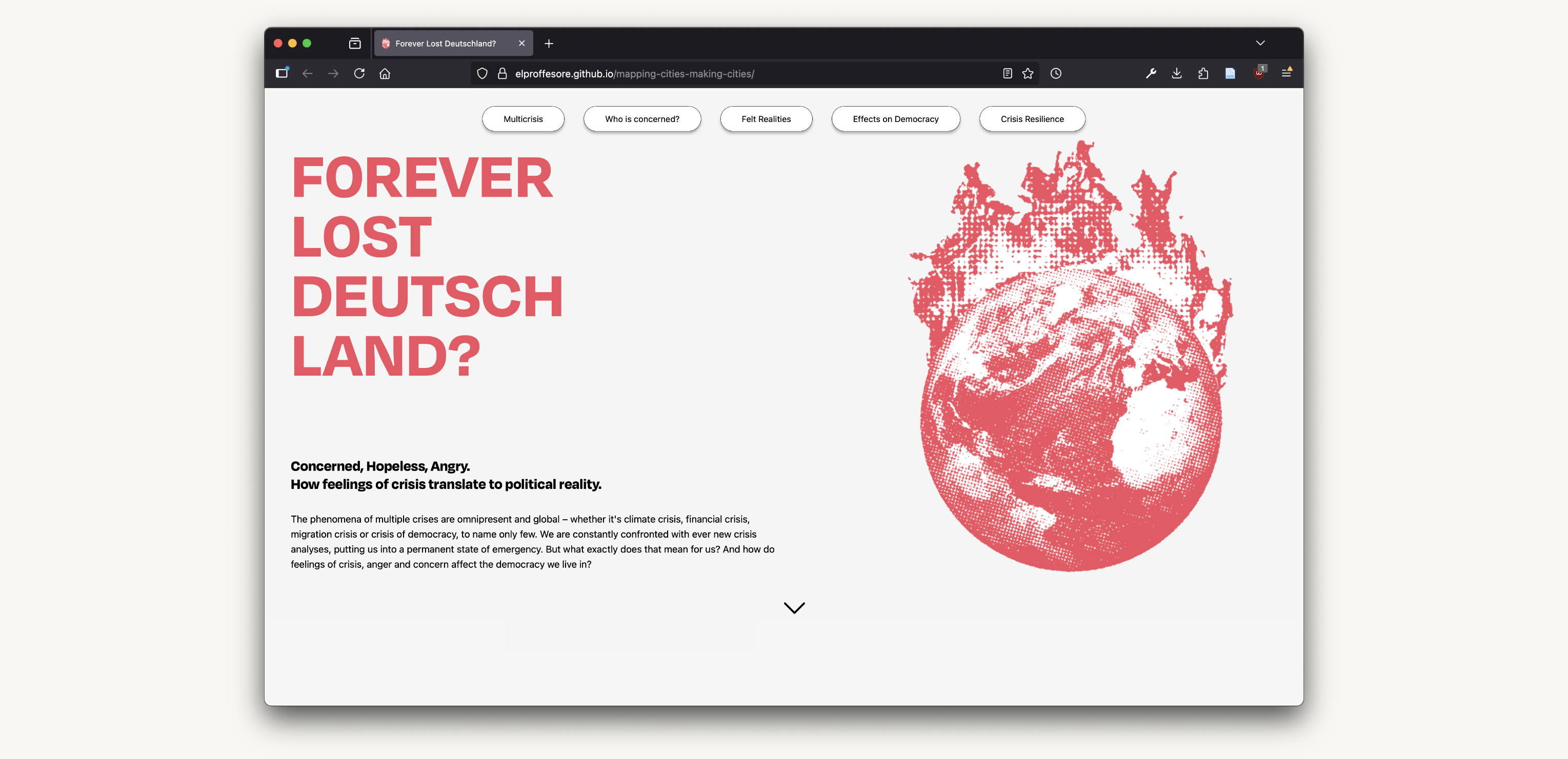
The result is a published interactive data story that guides users through the emotional landscape of crisis-era Germany, from raw sentiment data to its political implications and potential democratic responses. The project was developed together with Juliane Müller, Louisa Fortwengel, and Philipp Proff, who handled data analysis and technical implementation.