How should a digital space for mourning be designed in order to meet psychological needs while enabling new forms of mourning and connection in a displaced society?
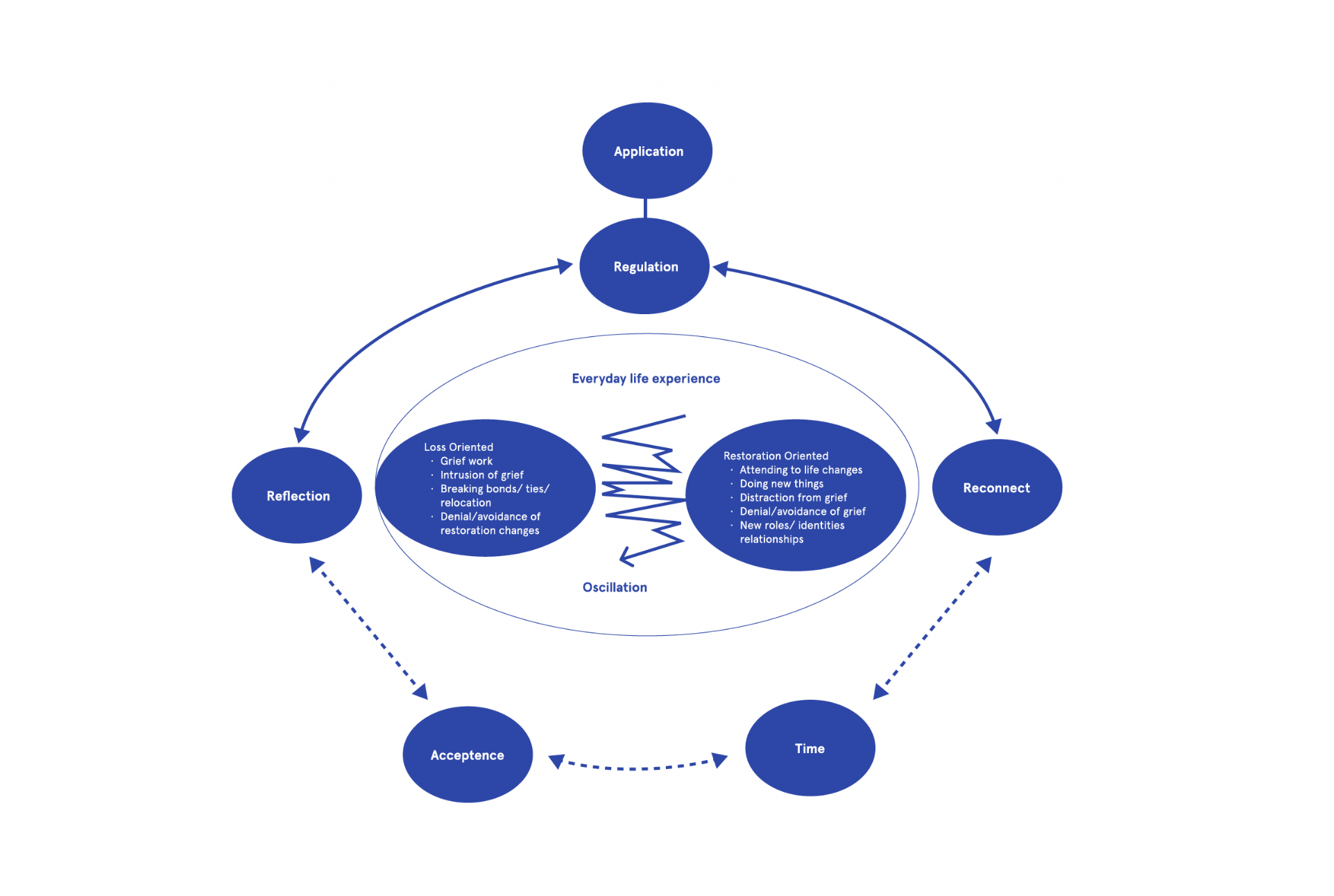
This master's thesis showcases how design can create new forms of emotional closeness through empathy, sensory interaction, and digital ritual. Combining insights from grief psychology, anthropology, and HCI, it offers a calm, intuitive space to remember, regulate, and reconnect. The research began with an interdisciplinary literature review, forming the basis for design hypotheses and theoretical grounding. From these insights, I developed personas, user stories, and speculative use scenarios to frame emotional needs and behavioural patterns.


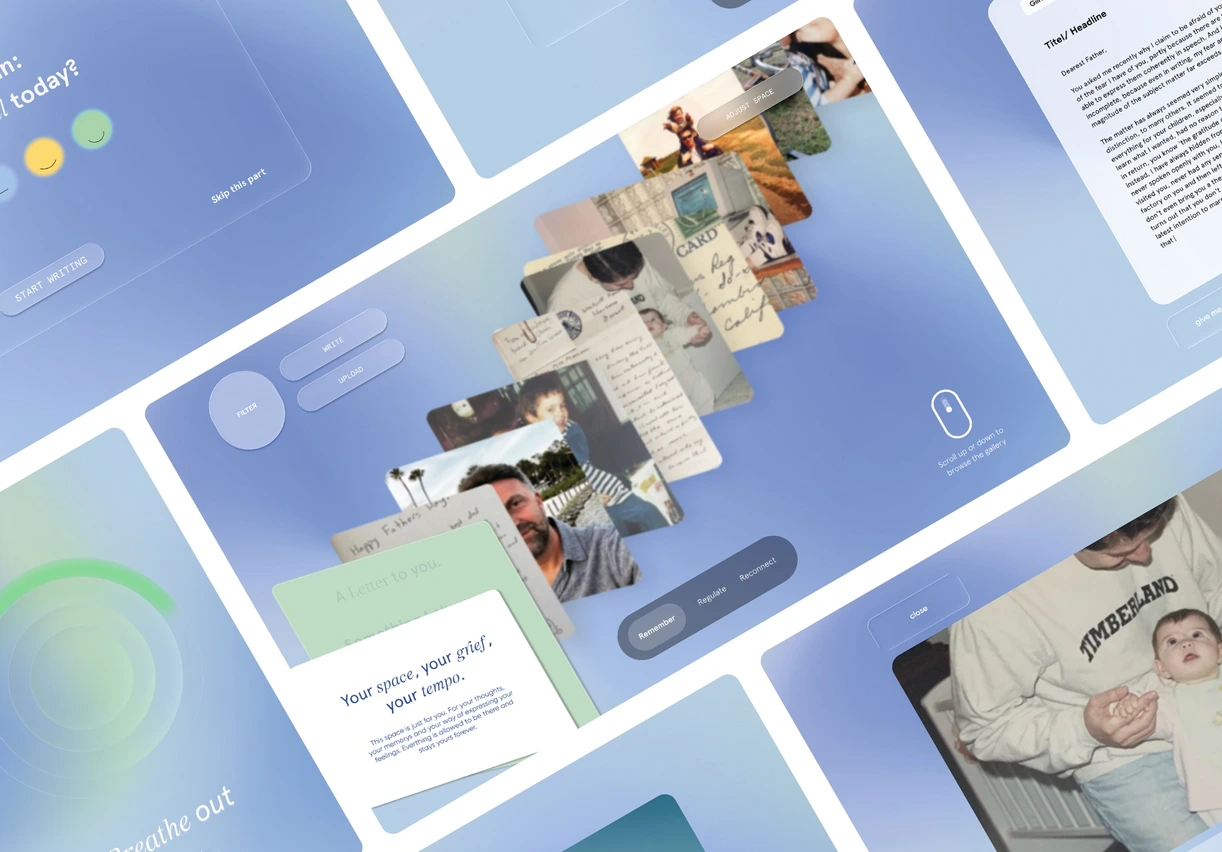
The final project includes a prototype that explores how rituals, flexibility, and nonlinear interaction can support the grieving process. As part of this, a web app and a sensory pillow were designed to support the grieving process. As part of the work, a small user feedback study on the UI was also conducted to test the appropriateness of the visual language and interaction style for this individual and emotional topic, validate early assumptions, and ultimately refine the concept. In conclusion, further empirical validation in a long-term study would be necessary, but the work contributes to the ongoing discussions about how digital environments can support emotionally complex human experiences in a thoughtful way.