
How does the chatbot being preceived by the users? Is it s helpful as one might think?
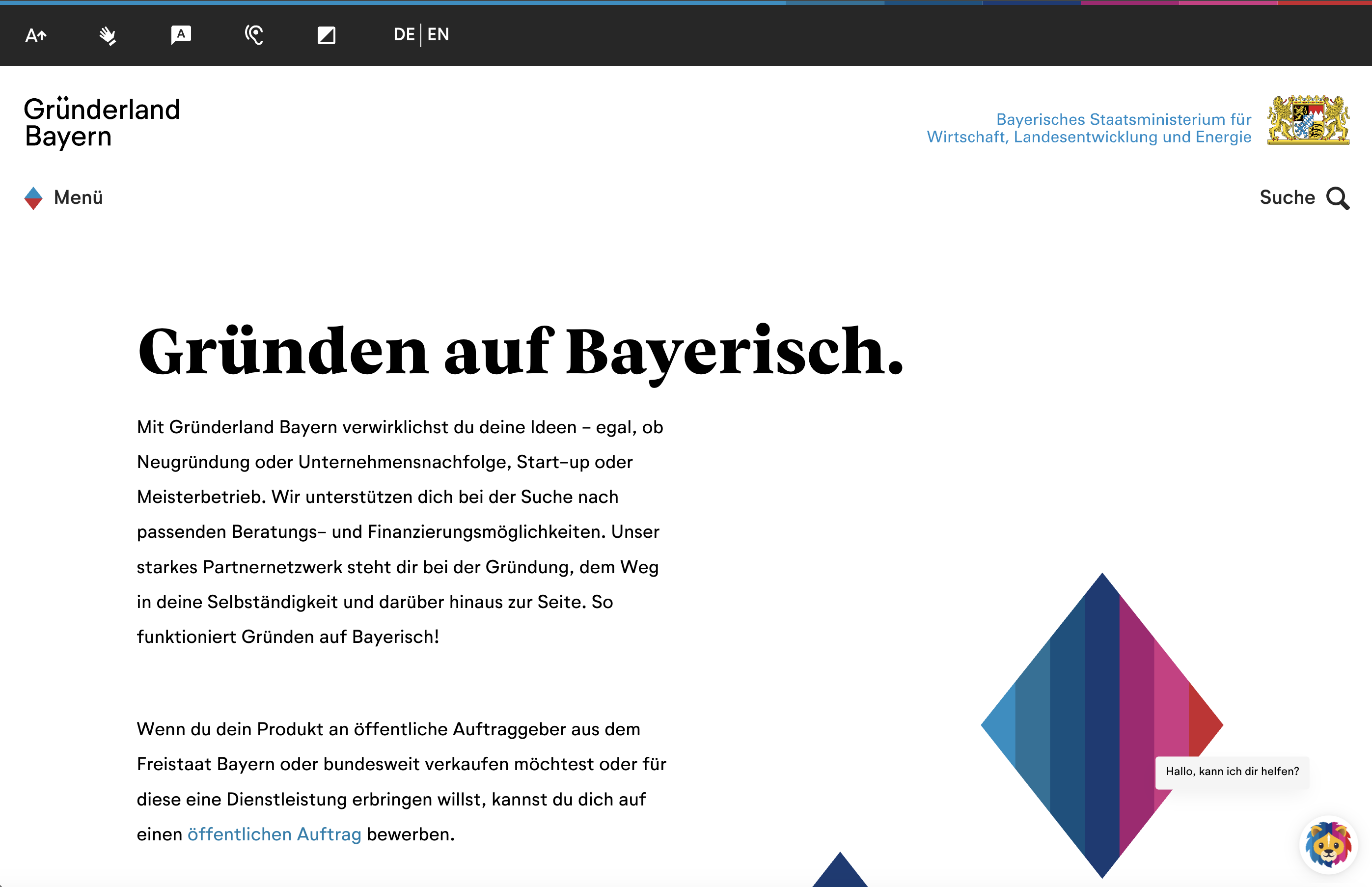
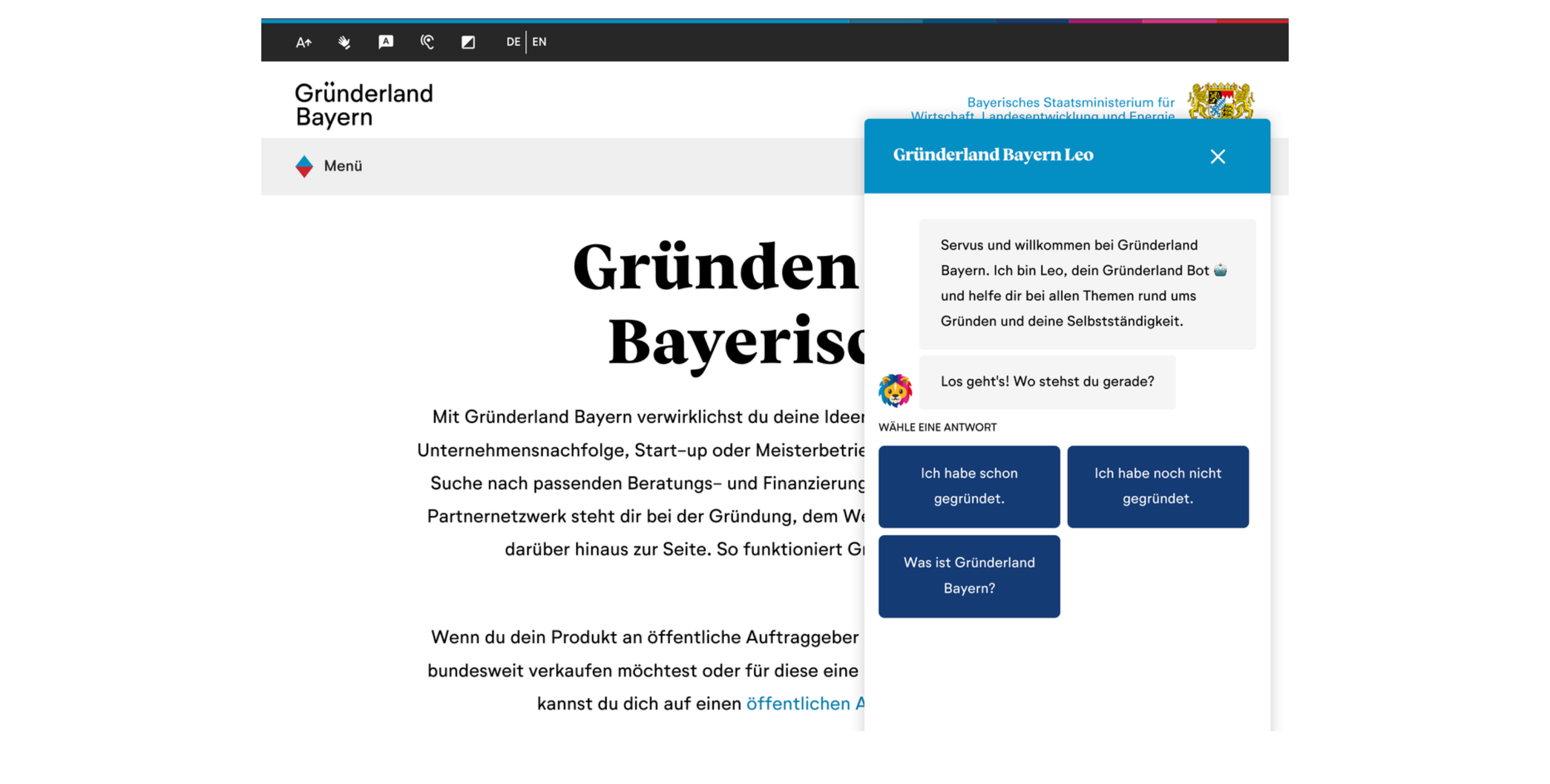
The Gründerland Bayern website provides a wide range of information and resources for entrepreneurs. To simplify navigation and improve accessibility, a chatbot named Leo was introduced. Its purpose was to guide users through the platform by asking a small number of questions and directing them to relevant content.However, initial data revealed a critical issue: the chatbot was barely used. Only around 0.43% of users interacted with it, raising concerns about its effectiveness and overall value. The key challenge was therefore to understand why the chatbot failed to engage users and how it could be improved to deliver meaningful support.
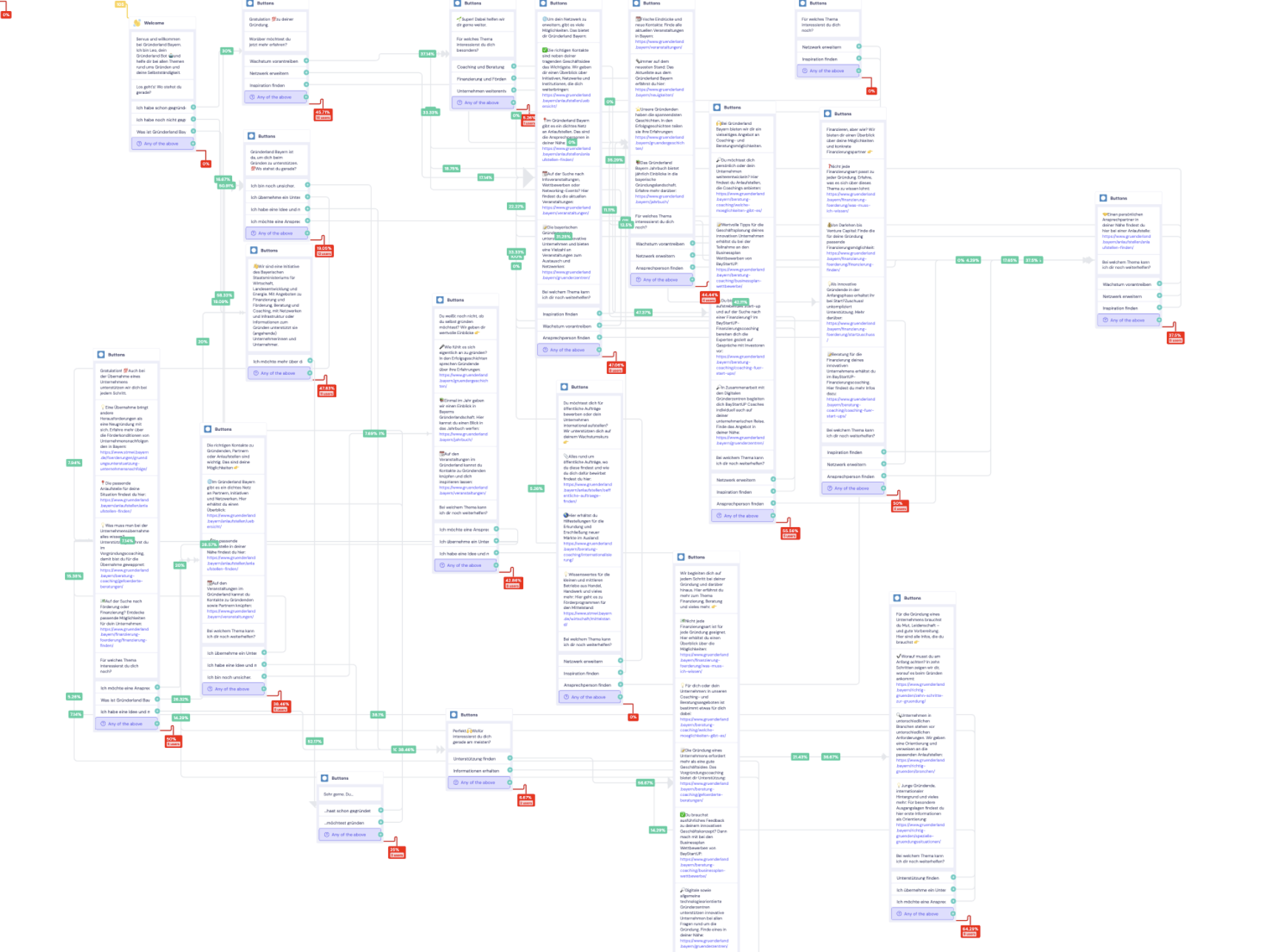
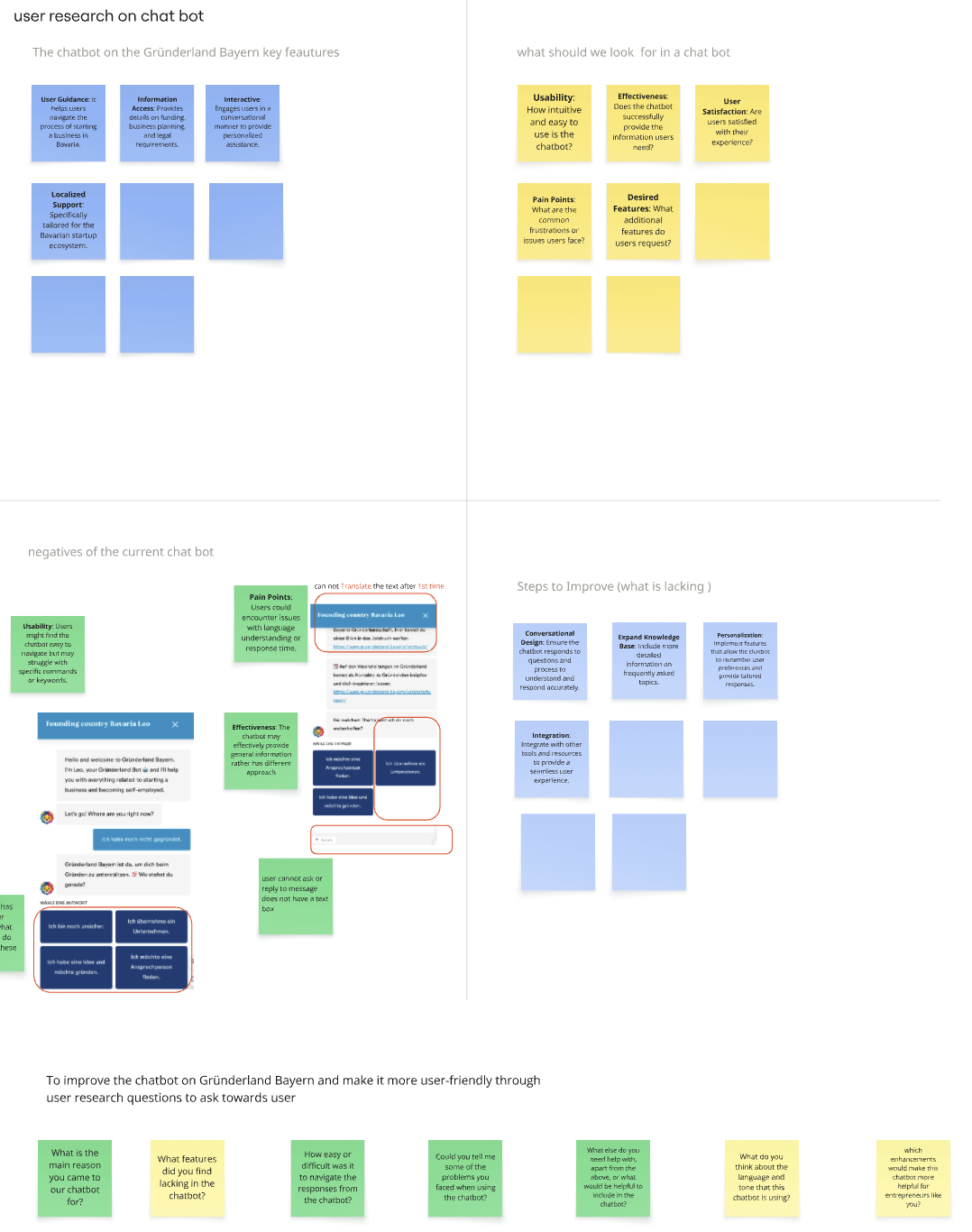
To investigate the problem, a mixed-methods approach combining quantitative and qualitative research was applied.
First, quantitative data from Google Analytics (Q1 and Q2 2024) and chatbot interaction data from Landbot were analyzed. This included user numbers, chatbot usage frequency, interaction flows, and drop-off points. The goal was to identify patterns in behavior and compare general website usage with chatbot engagement.
Second, qualitative user interviews were conducted to gain deeper insights into user expectations and perceptions. Participants were selected based on being startup-affine but largely unfamiliar with the website. The interviews followed a structured process: users first explored the website freely, then completed specific scenarios (e.g., searching for funding information), and finally answered targeted questions about their experience and the chatbot.
This combination of data and user feedback allowed for a comprehensive understanding of both what users did and why they behaved that way.
Result
The project resulted in a set of evidence-based recommendations to improve the chatbot’s usability, relevance, and overall perception. Based on a heuristic UX audit, usage data analysis, and user interviews, key friction points were identified, including unclear entry points, weak communication of the chatbot’s purpose, and missing contextual triggers. These insights were translated into actionable improvements such as refining the conversational framing, improving visibility and placement, and introducing more context-aware interaction cues. The outcome is a clear roadmap to reposition Leo as a more relevant and supportive touchpoint within the overall user journey.